




James Harding
30/04/2026
How Much Are Home EV Chargers in the UK?
If you are asking how much are home EV chargers, the short answer is that most UK buyers will spend anywhere from around £450 to £1,200 for the charger itself, with installation often adding several hundred pounds more. For a straightforward domestic job, the fully installed price commonly lands between £900 and £1,500, but that range can move up or down depending on the charger, your consumer unit, cable run and any protection or load management required.
That headline figure is useful, but it is not the whole buying picture. Home EV charging is one of those categories where the cheapest unit on paper is not always the best value once compliance, tariff compatibility and future requirements are factored in.
How much are home EV chargers by product type?
At the entry level, a basic smart home charger from a recognised brand will often start at roughly £450 to £650 for the hardware. These units usually cover the core requirement well – safe home charging, app control, scheduled charging and standard domestic use.
Move into the mid-range and the price typically sits around £650 to £900. This is where many homeowners end up, because the spec tends to balance well with day-to-day needs. You are more likely to see stronger app features, better tariff integration, cleaner cable management and broader compatibility with solar or load balancing accessories.
Premium home chargers can run from about £900 to £1,200 or more for the unit alone. In this bracket, buyers are usually paying for one or more of the following: higher-end finish, advanced software, solar diversion options, dynamic load management, vehicle-to-home readiness on selected models, or a stronger design-led aesthetic for visible front-of-house installation.
For most homes, the key point is this: charger cost is only one part of the final figure. A £500 charger with difficult installation can cost more overall than an £800 charger installed on a simple job.
What affects the price most?
The biggest cost difference usually comes from installation conditions rather than the charging speed alone. Most UK home chargers are 7.4kW single-phase units, so the variation in total price tends to come from what is required to install them safely and to current standards.
The charger brand and feature set
Brands such as Ohme, Hypervolt, Andersen, myenergi and Zaptec occupy different price points for good reason. Some focus on tariff-led charging and easy app use, while others lean harder into appearance, solar integration or installer flexibility. If you want a charger that works neatly with off-peak tariffs, that may justify a higher upfront spend because the running cost savings can be more meaningful over time.
Cable run length
If the charger is going on the wall near the consumer unit, installation is often more straightforward. If the charger needs to be fitted at the far end of a drive, detached garage or parking area, the cable run, containment and labour time all increase. Groundworks can push costs up quickly.
Consumer unit capacity and protection
Some homes are installation-ready. Others are not. If there is no spare way in the consumer unit, or if additional circuit protection is needed, the installer may need to fit extra hardware. This can include RCBOs, surge protection, isolators or PME fault protection depending on the charger and site conditions.
Load management requirements
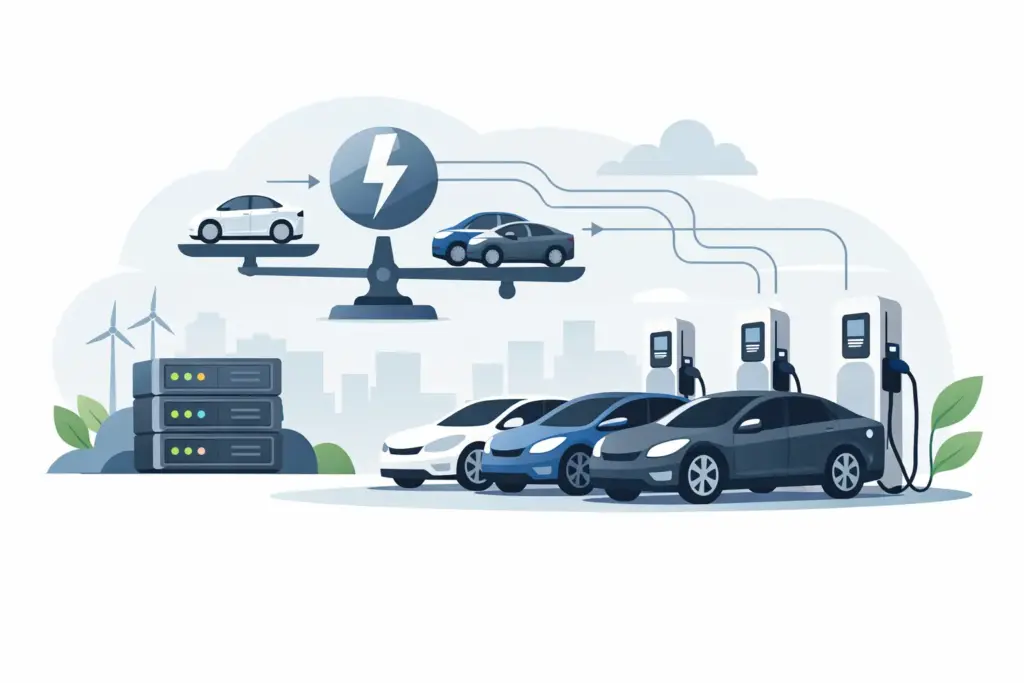
In properties with limited incoming electrical capacity, electric showers, heat pumps, battery storage or other high-load equipment, load balancing may be required. That adds hardware and commissioning time, but it can also be the difference between a compliant installation and one that is not suitable.
Earthing arrangement and compliance measures
Some installations need additional consideration around earthing and fault protection. That is why two houses on the same street can end up with noticeably different quotations. A professional installer is pricing the actual electrical environment, not just the box on the wall.
Typical installed costs for UK homes
For a standard 7.4kW smart charger on a straightforward domestic installation, many buyers will see quotations around £900 to £1,200 all in. That normally assumes a sensible cable run, standard wall mounting and no major upgrade work.
If the property needs additional protection devices, longer cabling or load management, the installed cost often moves into the £1,200 to £1,500 range. More complex jobs can go beyond that, particularly where trenching, remote parking spaces, outbuildings or consumer unit works are involved.
Where people get caught out is assuming all installers are quoting on the same basis. One quotation may include additional protection hardware, commissioning and full cable containment, while another may be priced tightly and add these items later. A like-for-like comparison matters.
Are cheaper home EV chargers worth buying?
Sometimes yes, sometimes no. A lower-priced charger can be perfectly suitable if it comes from a recognised manufacturer, supports your vehicle, works with your tariff goals and is being installed in a simple domestic setting.
The problem starts when price is treated as the only decision point. A charger that does not support the charging schedules you need, lacks the right app functionality or requires additional accessories to do what you expected can stop being a bargain quite quickly.
For trade buyers and installers, this is even more obvious. The real cost is not just the unit price. It is whether the charger arrives job-ready, whether the protection strategy is clear, whether load management options are available and whether the brand support is dependable if a commissioning issue appears on site.
How much are home EV chargers if you want solar or smart tariff integration?
This is where pricing starts to separate more clearly. If you want a charger purely for overnight vehicle charging, you can often stay toward the lower or middle end of the price range. If you want the charger to interact with solar PV, battery storage or time-of-use tariffs in a more advanced way, costs tend to rise.
That does not always mean the charger itself is dramatically more expensive, but it can mean extra accessories, CT clamps, configuration work or a more feature-rich model. Buyers with solar already installed should check compatibility early rather than assuming every smart charger handles solar charging in the same way.
Likewise, not every charger offers the same tariff integration experience. Some are especially strong for automated off-peak charging, while others are more general-purpose. If your electricity tariff is a big part of your EV running-cost strategy, this deserves more weight than cosmetic design.
What homeowners should budget for
A realistic budget for most UK homeowners is around £1,000 to £1,400 for a good-quality charger and professional installation. That is not the cheapest possible route, but it is a sensible planning figure for a compliant setup using a recognised brand.
If your installation is unusually simple, you may come in below that. If your property has a long cable route, limited capacity or electrical upgrade needs, you may need to budget above it. The useful approach is to budget for the whole system, not just the charger headline price.
It is also worth thinking one step ahead. If there is a good chance you will add solar, battery storage or a second EV later, choosing a charger with stronger integration options now may be better value than replacing a cheaper unit in a few years.
What trade buyers and installers should look at
For contractors pricing domestic EV work, charger cost is only one part of job profitability. Product availability, accessory coverage and compliance hardware matter just as much. Being able to source the charger, RCBOs, surge protection, load management devices, mounting solutions and installation consumables from one place can reduce delays and avoid specification gaps.
That is one reason a specialist supplier such as UK EV Installers Shop is useful in this market. Home charging is no longer a single-product sale. It is often a package involving charger selection, tariff compatibility, protection strategy and site-specific electrical requirements.
Installers also need to think about call-backs. A cheaper charger that creates app issues, poor handover experience or awkward commissioning can cost more in labour and customer support than a better-specified unit bought at a slightly higher trade price.
So, how much are home EV chargers really?
They are usually less expensive than people fear, but more variable than many expect. For the charger alone, a sensible market range is roughly £450 to £1,200. For supply and installation together, most standard UK domestic jobs will sit around £900 to £1,500, with complex sites going higher.
The right question is not only how much are home EV chargers, but what that price includes. A charger that matches your vehicle, tariff, property and future plans is normally the better buy than one that simply gets the lowest headline figure.
If you are comparing options, treat the charger, the installation and the electrical protection as one package. That is usually where the best long-term value sits – and where fewer surprises appear once the installer arrives.
7 Best Octopus Compatible Chargers
Looking for the best Octopus compatible chargers? Compare smart home EV chargers for UK tariffs, app control, load balancing and install fit.Hypervolt Home Pro review for UK buyers
Hypervolt Home Pro review for UK buyers. See charging speed, smart features, installation factors and whether this home EV charger is worth…How to Calculate Home EV Charging Cost
Learn how to calculate home EV charging cost using battery size, tariff rates and charging losses, with simple UK examples and practical…