




James Harding
02/06/2026
Can I Use Solar With EV Charger at Home?
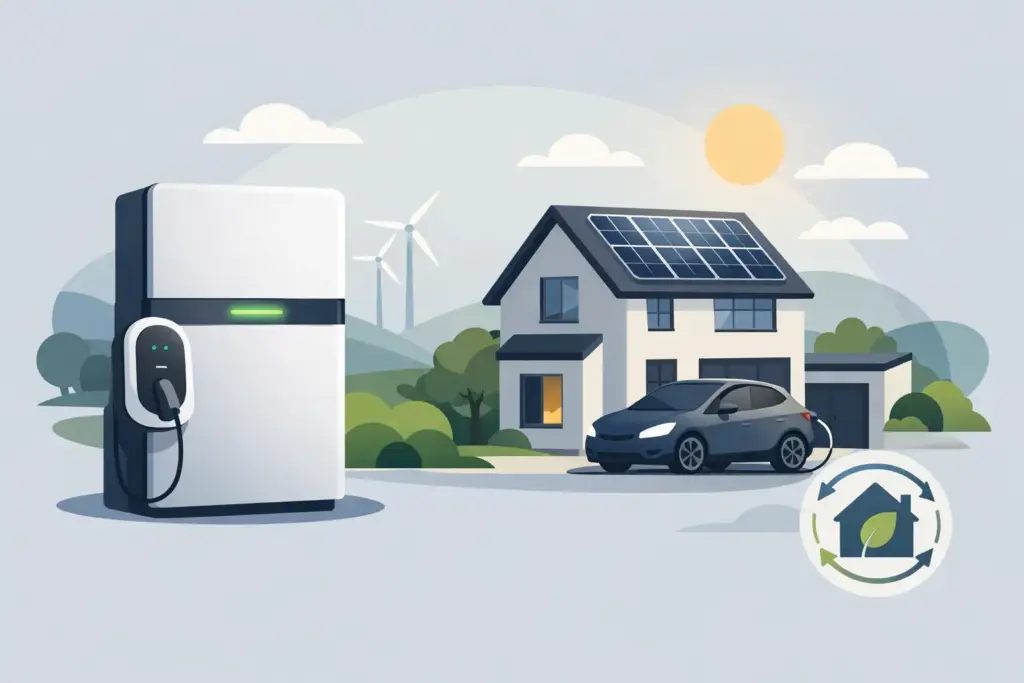
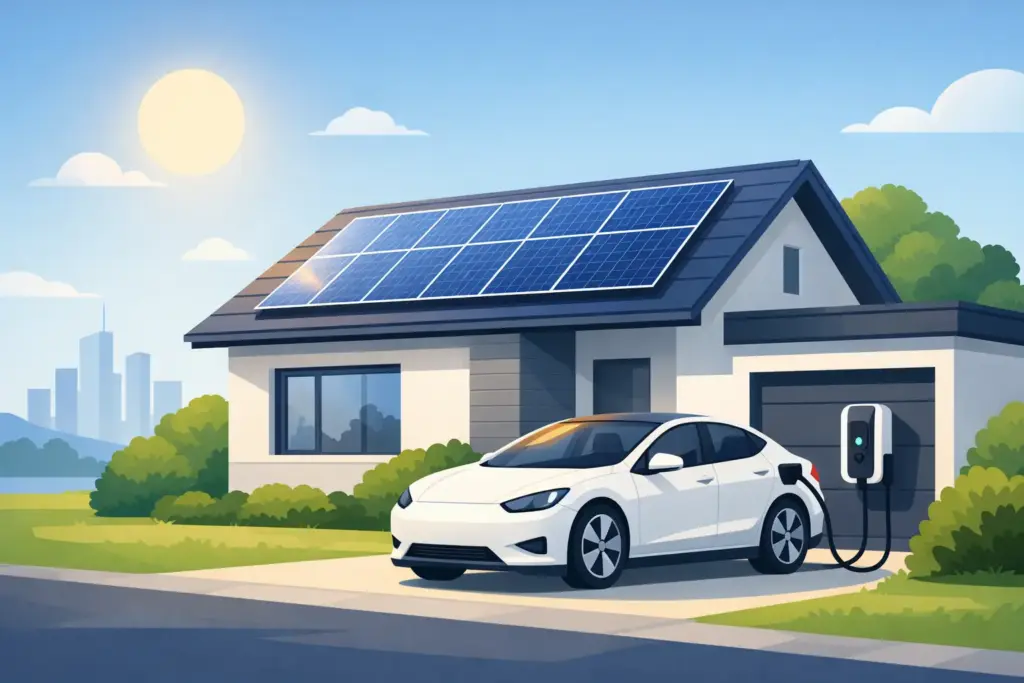
If your car is parked on the drive for hours while your solar is generating, it is only natural to ask: can I use solar with EV charger equipment at home? In most UK installations, yes, you can. The real question is not whether it is possible, but how well it will work with your roof size, charger, battery, household demand and the way you actually use the car.
For some homes, solar charging can cover a useful share of daytime EV miles. For others, it will only top up the car occasionally unless battery storage or off-peak charging is part of the wider setup. That is why this is a compatibility and design question, not just a yes or no purchase decision.
Can I use solar with EV charger systems?
Yes, but there are different ways to do it. At the simplest level, a standard home charger can still charge an EV in a property that has solar PV installed. The charger does not always need to be a dedicated solar charger to work on the same property. However, if you want the charger to respond intelligently to excess solar generation, the charger and controls need the right features.
This distinction matters. A basic charger will draw the power it needs when the car asks for charge, and that power may come partly from solar, partly from the grid, depending on what the house is using at that moment. A solar-aware charger, by contrast, can monitor generation and household load, then adjust charging output to use surplus solar more effectively.
For homeowners, that usually means lower imported electricity during sunny periods. For installers, it means checking CT clamp compatibility, load balancing, phase arrangement, minimum charging current and any app-based control logic before specifying equipment.
What actually happens when solar and EV charging run together?
Your solar panels generate electricity in real time. That power is used by the property first. If the house is using 1kW and the solar array is producing 4kW, there may be around 3kW available before import is needed. If the EV charger starts pulling 7kW, the shortfall comes from the grid unless charging output is limited or controlled.
This is the point many buyers miss. Solar does not automatically mean the car charges entirely from sunshine. In the UK, a single-phase home charger commonly operates up to around 7.4kW, while smaller residential PV systems often generate less than that for much of the day. On a bright summer afternoon, surplus solar may be enough to make a strong contribution. In winter, it may be modest.
Because of that, the best results usually come from matching charger behaviour to available generation instead of expecting the array to cover full charging power all the time.
The equipment you may need
If you are asking can I use solar with EV charger hardware in a practical sense, the answer depends on the products chosen. In many homes, the key items are the solar array itself, a compatible EV charger, metering or CT clamps, and sometimes battery storage.
A charger with solar modes is often the most useful starting point. These units can be set to charge only from excess solar, to blend solar with grid power, or to prioritise one source depending on the settings. Brands commonly chosen in the UK market offer different approaches, so it is worth checking exactly how each model handles surplus detection and current adjustment.
Battery storage can improve results, but it is not mandatory. Without a battery, excess solar can go straight into the EV if the car is connected at the right time. With a battery, you may have more flexibility to store daytime generation and use it later, although the economics depend on battery size, charging habits and tariff structure.
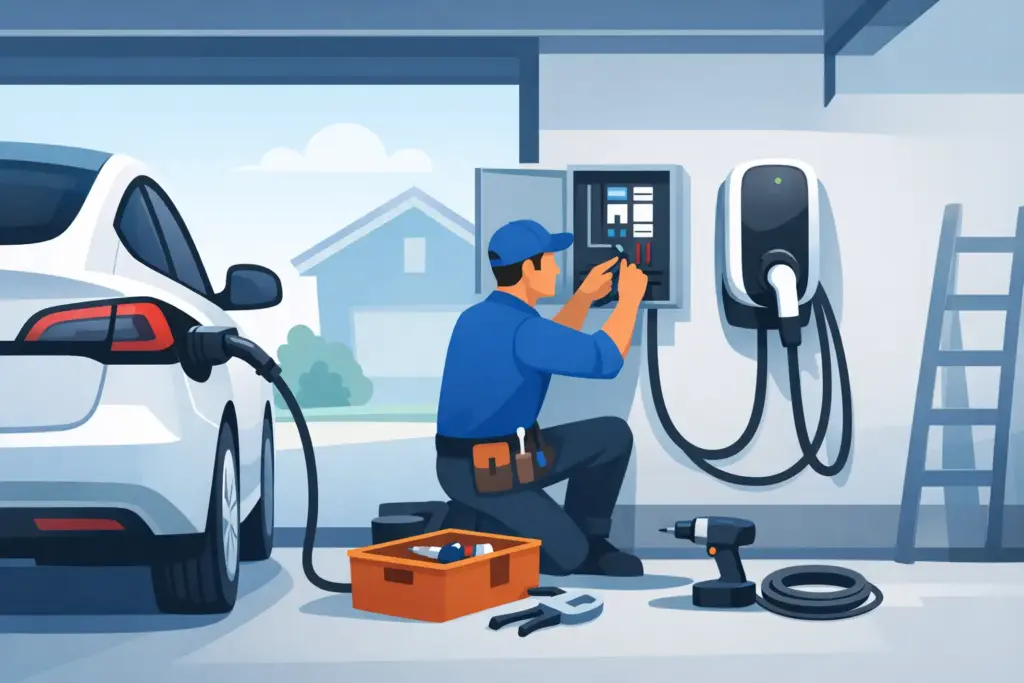
Installers also need to account for the rest of the electrical design. Protective devices, load management, PME considerations, SPD requirements, cable sizing and any manufacturer-specific accessories still matter just as much as the solar function itself.
When solar EV charging works best
The strongest case for solar and EV charging is usually a home where the vehicle is parked during the day for long enough to capture excess generation. That often suits people who work from home, households with a second car left on site, or drivers with flexible charging windows.
It also works well where annual mileage is moderate and the owner is happy to add charge gradually rather than expecting a rapid refill every day. Even a few kilowatt-hours of solar charging several times a week can offset a meaningful amount of imported electricity over the year.
Larger solar arrays generally improve the picture, especially in spring and summer. If the house has relatively low daytime demand, more surplus can be diverted into the car rather than being absorbed by appliances, immersion heating or air conditioning.
Where the limits show up
The main limitation is timing. Solar generation peaks in daylight hours, while many EV drivers need to charge in the evening. If the car is away during the day and returns after sunset, solar-only charging becomes much less realistic unless battery storage has been sized specifically for that use.
The second limitation is output. EV chargers often need a minimum current to maintain charging, and low or fluctuating solar generation can fall below that threshold. Smart chargers can pause and resume, or blend with the grid, but the user needs to understand what mode is active. Otherwise, there is a risk of assuming the car is charging only from solar when grid import is still filling the gap.
Seasonality matters too. UK winter generation is far lower than summer output, so a setup that performs well in June may contribute far less in December. That does not make the system poor value, but it does mean expectations need to be realistic.
Solar-only, solar-priority or tariff-led charging?
For most households, the best answer is not strictly solar-only. A mixed strategy is usually more practical. Solar-priority charging during the day, combined with off-peak tariff charging overnight, often gives better year-round results than relying on one source alone.
Solar-only mode can be attractive if the aim is to maximise self-consumption and minimise imported electricity during sunny periods. But it may charge slowly or irregularly. That suits some users perfectly and frustrates others.
Solar-priority mode is often the better compromise. It uses surplus generation when available and supplements from the grid when needed to keep charging moving. For drivers with regular mileage requirements, this tends to be easier to live with.
Then there is tariff-led charging. In many UK homes, cheap overnight electricity remains one of the most cost-effective ways to run an EV, particularly in winter. Solar still adds value, but more as part of a broader energy strategy than as the sole charging source.
What installers and buyers should check before choosing a charger
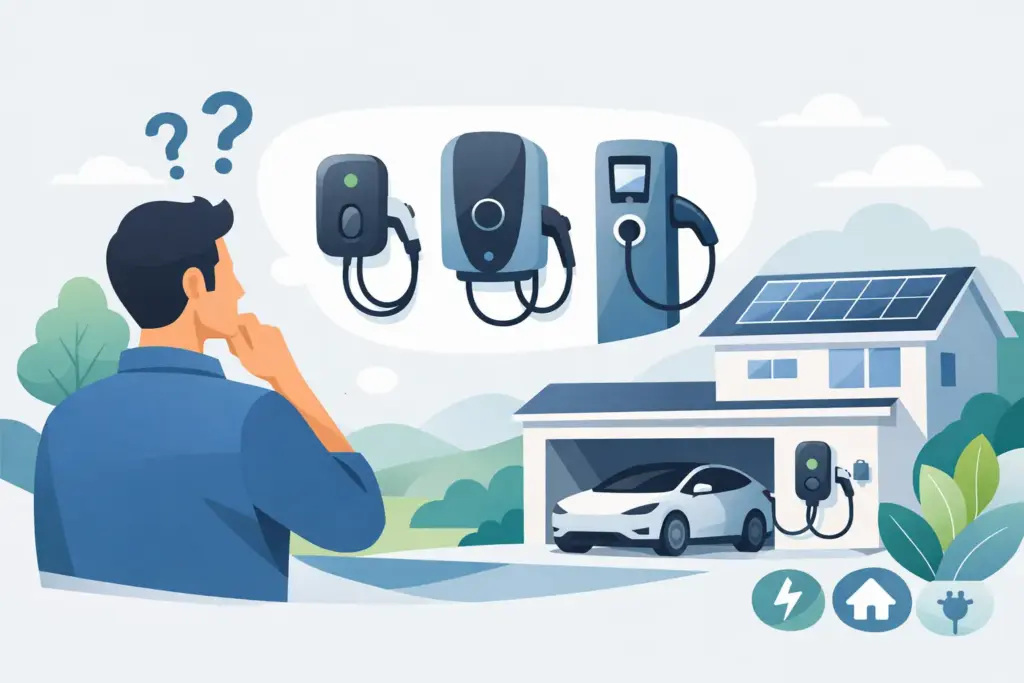
This is where product selection becomes more important than the headline feature list. Not every charger that works on a home with solar will optimise solar charging in the same way. Some need extra hardware. Some offer better app control. Some are stronger on load balancing or tariff integration than on true surplus-only functionality.
For homeowners, the key checks are straightforward. Make sure the charger supports the charging behaviour you want, whether that is excess solar only, blended charging, or scheduled tariff charging with solar as a bonus. Confirm that your vehicle can tolerate variable charging patterns and that the app controls are clear enough for day-to-day use.
For trade buyers and installers, specification depth matters more. Confirm sensor compatibility, communication method, firmware support, current modulation range, single-phase or three-phase requirements, and whether additional accessories are needed to deliver the advertised solar features. If the property also includes battery storage, check how the charger logic interacts with it. Poorly matched controls can lead to the battery discharging into the car when the client expected solar surplus only.
A one-stop technical supplier such as UK EV Installers Shop is useful here because the charger is only part of the job. Many projects also need protection devices, mounting options, tails, isolators, enclosure components and brand-specific accessories to make the installation compliant and job-ready.
So, can I use solar with EV charger equipment and save money?
Usually yes, but the level of saving depends on behaviour as much as hardware. If your car is home during solar hours, your charger can modulate intelligently and your array produces enough surplus, the savings can be worthwhile. If your routine relies on fast evening charging, the value may come more from off-peak tariffs, with solar contributing where it can.
The strongest setups are designed around how the property actually uses energy, not around a single headline claim. A good charger paired with the right controls can make solar much more useful for EV charging, but it will not override the limits of roof generation, weather and vehicle availability.
If you are choosing equipment now, treat solar compatibility as part of the wider specification rather than a standalone feature. The better the charger, controls and installation design fit the property, the more likely the system will deliver savings you can see rather than promises you cannot.
myenergi libbi review for UK homes
Our myenergi libbi review looks at performance, backup options, solar pairing, installation factors and whether it suits UK homes today.How Much Are Home EV Chargers in the UK?
How much are home EV chargers in the UK? See charger, installation and upgrade costs, plus what changes the final price for…Tethered vs Untethered Charger: Which Fits?
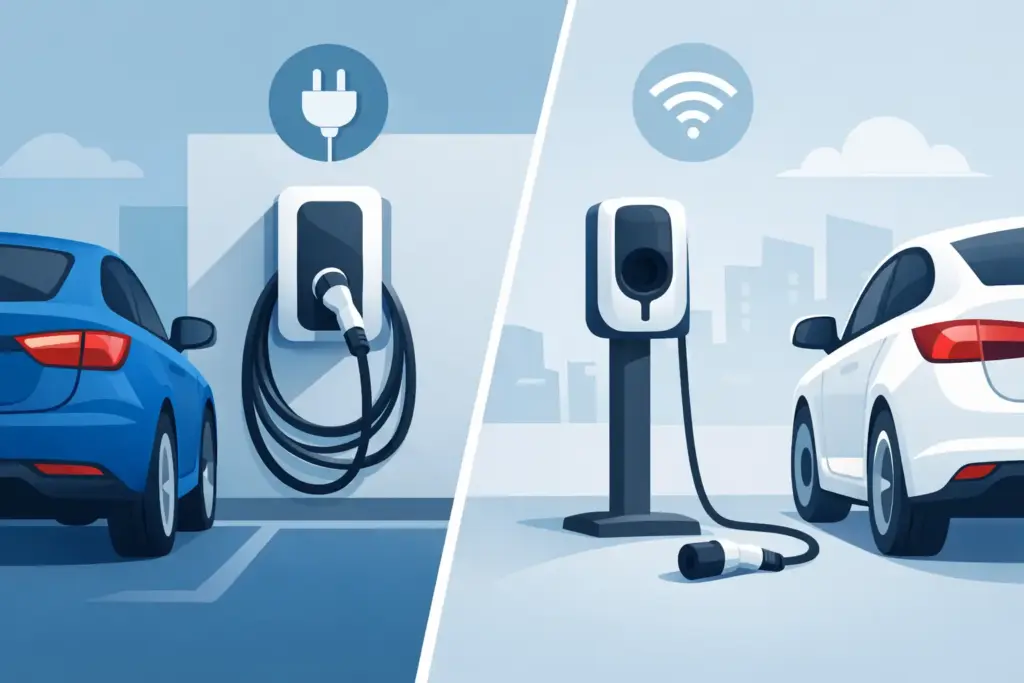
Tethered vs untethered charger – compare cable convenience, looks, compatibility and installation needs to choose the right EV charger.