




James Harding
25/05/2026
Andersen vs Zaptec charger: which suits you?
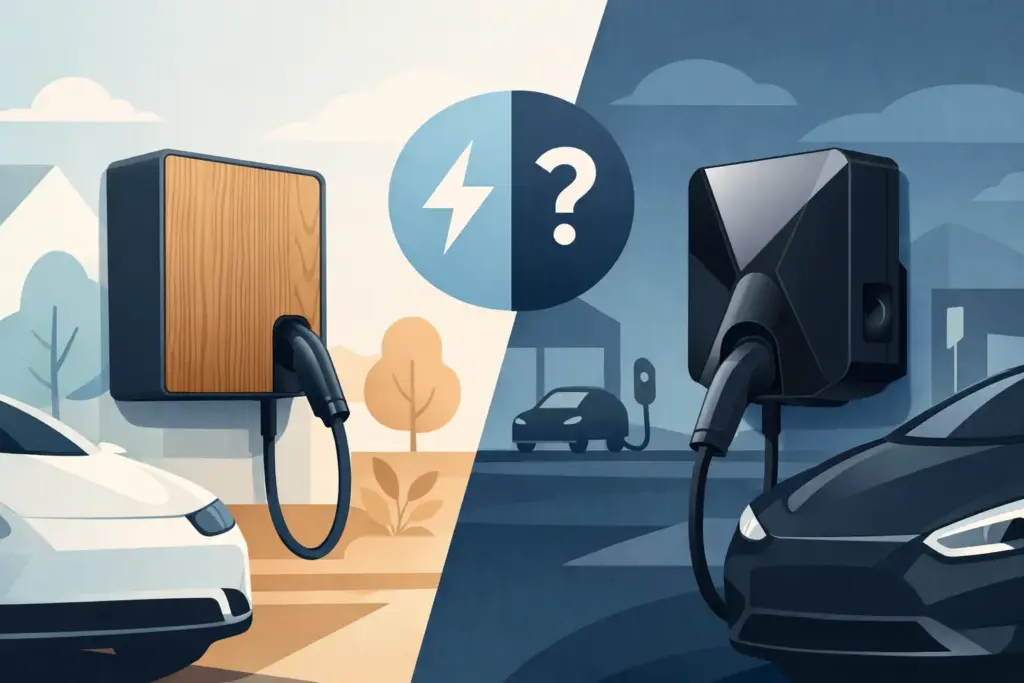
Choosing between an Andersen vs Zaptec charger usually comes down to one thing – are you buying for the look of the finished install, or for compact practicality and flexibility? Both are well-known AC home charging brands in the UK, both support smart charging, and both can be the right answer. The difference is that they solve the same job in noticeably different ways.
For homeowners, that often means deciding whether the charger needs to blend into the front of the property or simply deliver reliable day-to-day charging with minimal fuss. For installers, it is more about mounting constraints, cable routing, connectivity expectations and whether the site needs built-in elegance or straightforward hardware. That is where the comparison becomes useful.
Andersen vs Zaptec charger: the main difference
Andersen has built its reputation around appearance, finish quality and hidden cable storage. If the charger is going on a visible driveway wall, a rendered frontage or a premium new-build, Andersen tends to appeal to buyers who want the unit to look deliberate rather than purely functional. The concealed cable arrangement is a major part of that appeal because it keeps the installation tidier once the job is complete.
Zaptec takes a different route. The design is compact, modern and neat, but the bigger selling point is usually the small physical footprint and strong smart charging feature set. It is often a very practical choice where wall space is limited, where the visual priority is low-profile hardware rather than cable concealment, or where users want a charger that feels highly app-driven and adaptable.
Neither approach is better in every case. One is more design-led, the other more compact and technology-focused.
Design and cable management
This is often the fastest way to narrow the decision.
Andersen chargers are widely chosen because they do not look like standard charging hardware. The unit is designed to present a cleaner external finish, and the integrated cable storage helps avoid the usual loop of charging cable hanging on the wall. On homes where the charger will be visible from the street or close to the main entrance, that can matter a lot. Customers spending on landscaping, resin drives or exterior upgrades often prefer not to spoil the look with an exposed tethered cable.
Zaptec chargers are smaller and less visually dominant. That can be an advantage in its own right. If the installation point is narrow, between doors, or on a garage return where space is tight, a compact unit can be easier to accommodate. The trade-off is that if you want hidden cable storage as part of the charger itself, Andersen has the clearer edge.
So the question is not simply which looks better. It is whether you want a charger that disguises the cable and acts as part of the exterior finish, or whether a smaller, minimalist charger body is enough.
Tethered or untethered setup
Cable preference makes a real difference to day-to-day use.
Andersen is strongly associated with tethered charging and hidden cable management. For many drivers, especially those charging at home every night, that is convenient. The cable is always there, ready to use, and can be stored within the unit for a cleaner result. That works particularly well for households with a consistent parking position and one main vehicle connector type.
Zaptec is commonly considered by buyers who prefer an untethered arrangement, although exact model options should always be checked before purchase. An untethered charger can suit users who want a cleaner wall when the unit is not in use, or households changing vehicles over time. It can also be useful where cable replacement flexibility matters, since the charging lead is separate from the charger body.
From an installer perspective, customer expectations should be clear early on. Some users say they want a tidy charger when what they really mean is they do not want to handle and store a separate cable in the boot. Others want the wall to stay as uncluttered as possible and do not mind plugging in their own lead each time.
Smart charging and app control
Both brands sit firmly in the smart charger category, but buyers often approach them with different priorities.
Zaptec is frequently shortlisted because of its smart functionality, app-based control and software-led experience. For users who want scheduling, charging session visibility and ongoing control through an intuitive digital platform, Zaptec has strong appeal. This can be especially relevant for EV owners trying to align charging with off-peak tariffs and wanting straightforward control over when the charger runs.
Andersen also offers smart charging capability, but buyers are often drawn to it first for design and finish, then assess whether the software features meet their needs. That does not make it a weaker option, but it does mean the decision pattern tends to be different. With Andersen, the visual and physical product is often the starting point. With Zaptec, the smart feature set and compact form factor are often central from the outset.
For either charger, tariff compatibility, connectivity reliability and update support should be checked against the exact product generation and the customer’s intended setup. In some homes, weak Wi-Fi or awkward meter positions are more important than the badge on the front of the charger.
Installation considerations for UK properties
This is where the Andersen vs Zaptec charger comparison becomes more technical.
Andersen may require a bit more thought where appearance is part of the brief. Customers choosing it are often more sensitive to cable entry position, mounting height and how the charger sits against the wall finish. A poor installation can undermine the reason they chose the product in the first place. If the charger is being fitted to brickwork at the front of the property, neat containment and precise positioning matter.
Zaptec can be easier to place in tighter locations because of its smaller size. On side passages, compact garages or constrained parking bays, that can simplify the job. If the installer needs to work around drainpipes, door reveals or limited fixing space, a compact charger can reduce compromises.
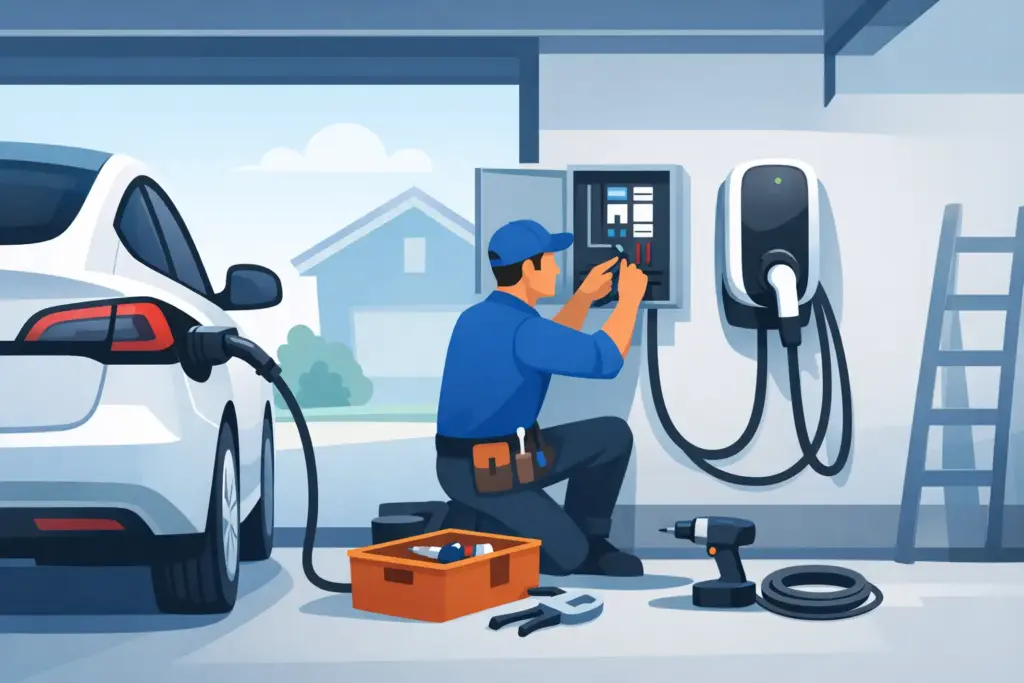
Electrical requirements still need the same professional attention either way. Load management, earthing arrangement, circuit protection and any required PME fault protection remain part of the wider system design. For many installers, the charger itself is only one part of the basket. The real job includes the right protective devices, fixings, cabling and any supporting accessories needed to complete a compliant installation efficiently.
Which charger suits which buyer?
Andersen is usually the better fit for the buyer who cares deeply about how the charger looks on the house. That tends to include premium residential projects, architect-led refurbishments and customers who do not want exposed charging hardware to dominate the frontage. It also suits drivers who want a tethered cable ready to go without leaving it visibly wrapped around the unit.
Zaptec is often the better fit for buyers who want a compact charger with strong smart credentials and a less obtrusive footprint. It can be a good match for smaller properties, practical retrofits and users who value app control and flexibility over hidden cable storage.
For trade customers, the right recommendation depends on the site. If the client has spent ten minutes discussing cladding colour and driveway finish, Andersen is likely to stay on the shortlist. If they are focused on space, software and everyday function, Zaptec often makes more sense.
Price, value and long-term fit
Price should not be viewed in isolation because these chargers appeal for different reasons.
Andersen can justify a higher spend where aesthetics are part of the buying decision. In those cases, the customer is not simply buying kilowatts of charging capacity. They are paying for a charger that works with the property rather than against it. If visual impact matters every day, that added value is real.
Zaptec often looks strong on practical value if the buyer wants a compact smart charger without paying primarily for decorative finish. For many homes, that is the more rational choice. You still get the core home charging function and connected features, but with the focus placed on usability and footprint.
The mistake is assuming either option is universally better value. Value depends on what the customer is actually trying to solve.
Final thought on Andersen vs Zaptec charger choices
If you are deciding between Andersen and Zaptec, start with the wall it is going on, the way the driver will use it every day, and how much smart control really matters in practice. Once those are clear, the better option usually becomes obvious. A charger should not just look good on a spec sheet – it should fit the property, the vehicle and the installation plan without compromise.
Can I Use Solar With EV Charger at Home?
Can I use solar with EV charger systems at home? Learn what works, what equipment you need, and the limits of solar…How to Lock Home EV Charger Access
Learn how to lock home EV charger access with app settings, RFID, cable locks and physical measures to reduce misuse and improve…What Is the Fastest Home EV Charger?
What is the fastest home EV charger? Learn UK limits, single-phase vs three-phase, vehicle charging caps and what actually makes home charging…