




James Harding
07/05/2026
What Is the Fastest Home EV Charger?
If you are asking what is the fastest home EV charger, the short answer in the UK is usually a 7.4kW charger for most homes and a 22kW charger for properties with a three-phase supply. The catch is that charger speed on paper is only part of the picture. Your property supply, the charger itself, your car’s onboard charger and any load management settings all decide how fast the battery actually charges.
That is why this question matters at buying stage. A charger can be sold as fast, but if your vehicle only accepts 7kW AC charging or your home only has single-phase power, paying for a higher-rated unit may not give you any real-world benefit.
What is the fastest home EV charger in the UK?
For the vast majority of UK households, the fastest practical home EV charger is a 7.4kW AC wall charger connected to a single-phase supply. This is the standard high-speed domestic option because most homes in the UK have single-phase electricity.
If a property has a three-phase supply, the fastest home EV charger is typically a 22kW AC unit. These are much quicker in the right setup, but they are not suitable for every home and they are only worth fitting if the vehicle can take advantage of that charging rate.
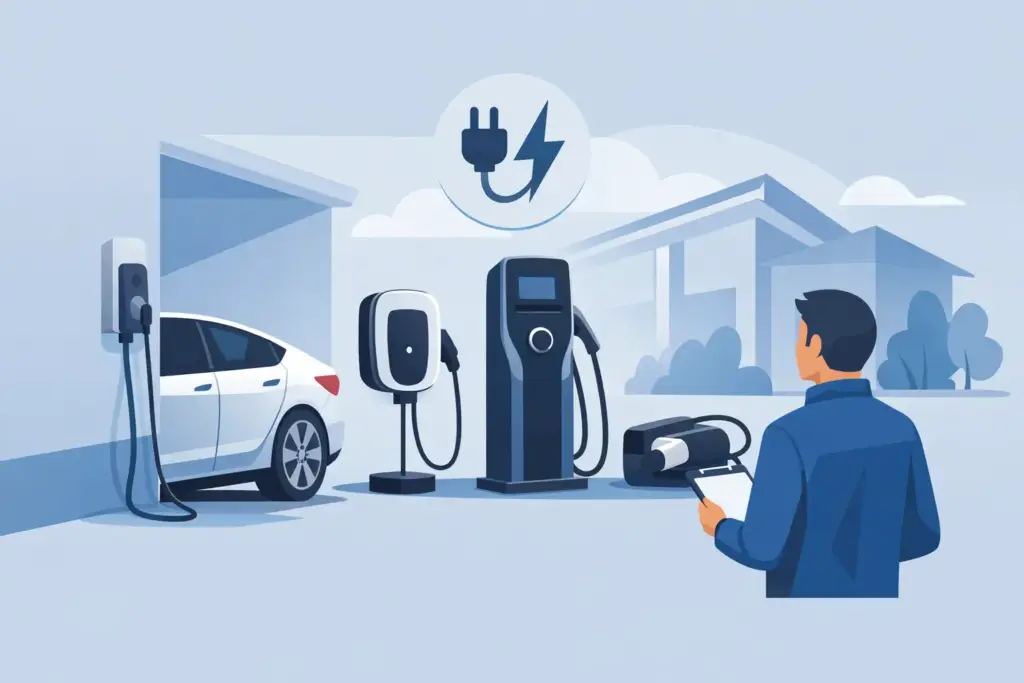
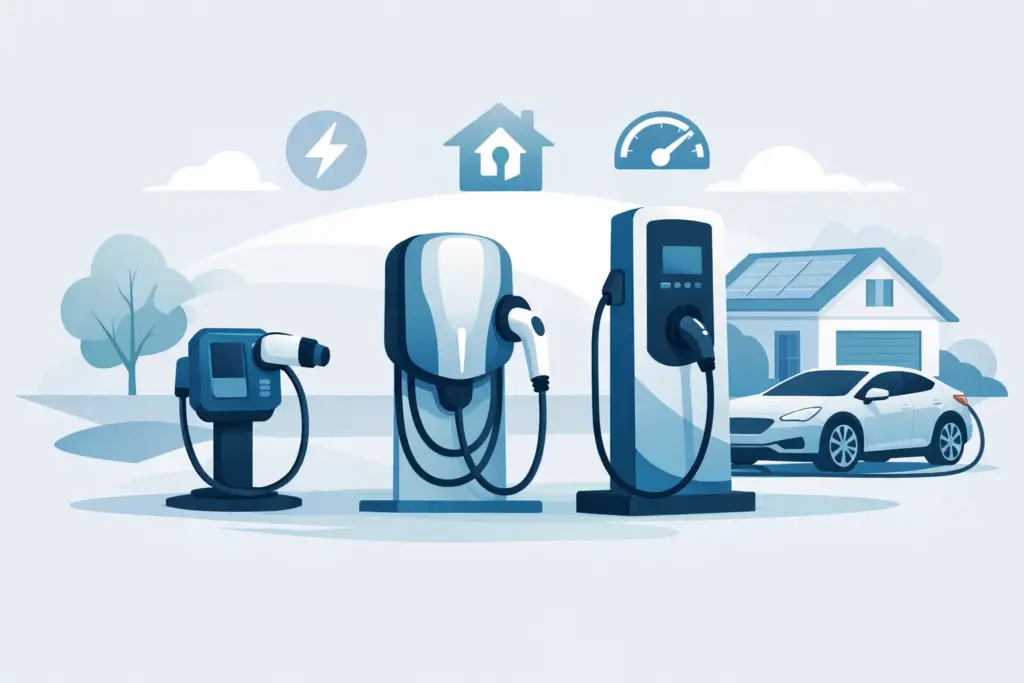
In simple terms, UK home charging usually falls into three broad levels. A 3-pin plug is the slowest, often around 2.3kW. A dedicated home wall charger at 7.4kW is the common upgrade. A 22kW charger sits above that, but only where supply and vehicle compatibility line up.
Why charger speed depends on more than the charger
A home charger does not force electricity into the car at its headline rate. It can only supply up to its maximum output, while the car decides what it can accept over AC charging. That is why a 22kW charger connected to a car with a 7kW onboard charger will still charge at around 7kW.
This is where many buying mistakes happen. People compare chargers by peak rating alone, when the better comparison is charger output against property supply and vehicle acceptance. The fastest setup is the one with no obvious bottleneck.
Single-phase vs three-phase
Single-phase supply is standard in most UK homes and supports up to 7.4kW for a typical domestic EV charger installation. That is fast enough for overnight charging and daily top-ups for most drivers.
Three-phase supply is more common in commercial premises and some larger or newer residential properties. It can support 11kW or 22kW AC charging, depending on the charger and vehicle. If you do not already have three-phase, upgrading your supply can be expensive and is rarely justified just for EV charging unless there is a wider electrification plan in place.
Your vehicle’s onboard charger limit
This is often the deciding factor. Some EVs accept only 7.4kW on AC. Others can take 11kW, and a smaller number can accept 22kW AC. If your car is capped at 7.4kW, installing a 22kW charger at home will not make it charge faster on AC.
This is separate from DC rapid charging. A vehicle may be capable of very high public rapid charging speeds while still being limited to 7kW or 11kW AC at home. That difference causes confusion because drivers see a high kW figure in the vehicle specification and assume the same applies on a domestic wall box. It usually does not.
Battery size and charging curve
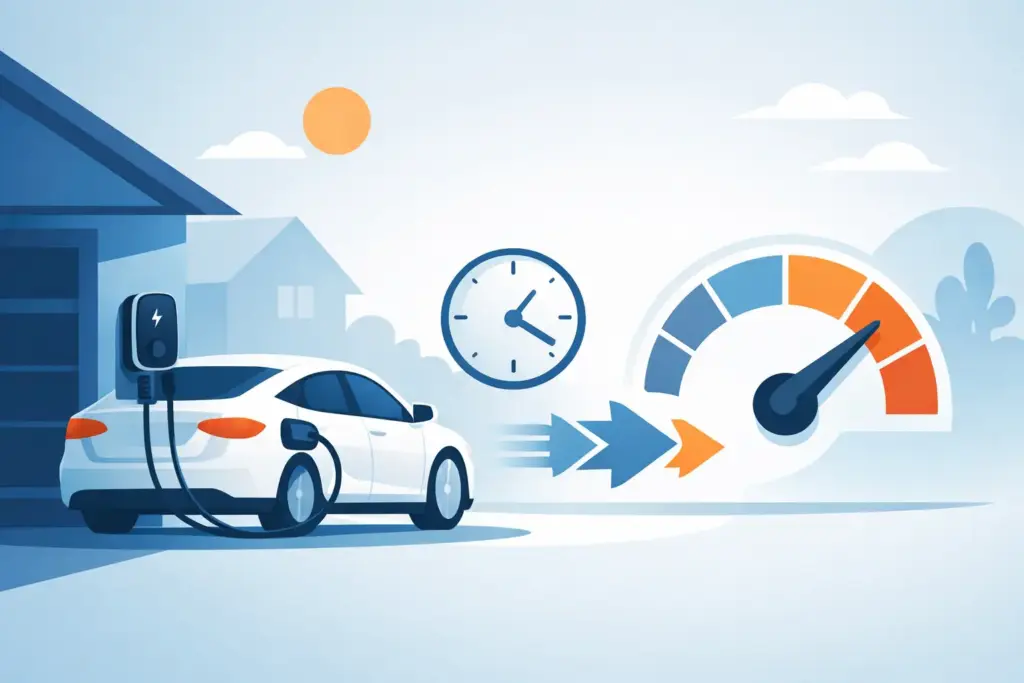
A larger battery takes longer to fill, even with a faster charger. As a rough guide, a 7.4kW charger can add around 25 to 30 miles of range per hour depending on vehicle efficiency. A 22kW charger can do much more, but only in the right conditions.
Charging speed also is not always perfectly linear in real use. Battery temperature, state of charge and vehicle software can affect the actual rate. For home users, this usually matters less than it does on DC rapid charging, but it still means headline times are only estimates.
Is 7.4kW fast enough for home charging?
For most UK homeowners, yes. A 7.4kW charger is usually the best balance of speed, installation simplicity and cost. If your vehicle is parked overnight for eight hours, that is enough time to add a substantial amount of range, often more than many drivers use in several days.
This is why 7.4kW units dominate the domestic market. They suit standard home supplies, work with a wide range of vehicles and are supported by a large choice of smart charging models. If you want tariff scheduling, solar integration, app control or dynamic load balancing, many of the strongest home charger options in the UK sit in this category.
For trade buyers and installers, it is also the most straightforward route for compliant domestic work. Product choice is broad, accessories are easy to source and the installation approach is familiar across mainstream residential projects.
When does a 22kW home charger make sense?
A 22kW charger makes sense when three things are true at the same time. The property has three-phase power, the vehicle can accept more than 7.4kW AC, and the user genuinely needs shorter charging windows at home.
That could apply to high-mileage drivers, homes with multiple EVs, or mixed domestic and business properties where vehicle turnaround matters. It can also suit future-proofed projects where a client wants a stronger AC setup because they expect compatible vehicles later on.
Even then, there are trade-offs. A 22kW charger usually brings higher equipment and installation costs, and in some domestic settings it may be more charger than the user needs. If the car sits on the drive all night, the practical gain over a 7.4kW unit may be limited.
What is the fastest home EV charger for most buyers?
If the question is what is the fastest home EV charger that most UK buyers can actually use, it is a 7.4kW smart charger. That is the realistic answer, not the highest theoretical one.
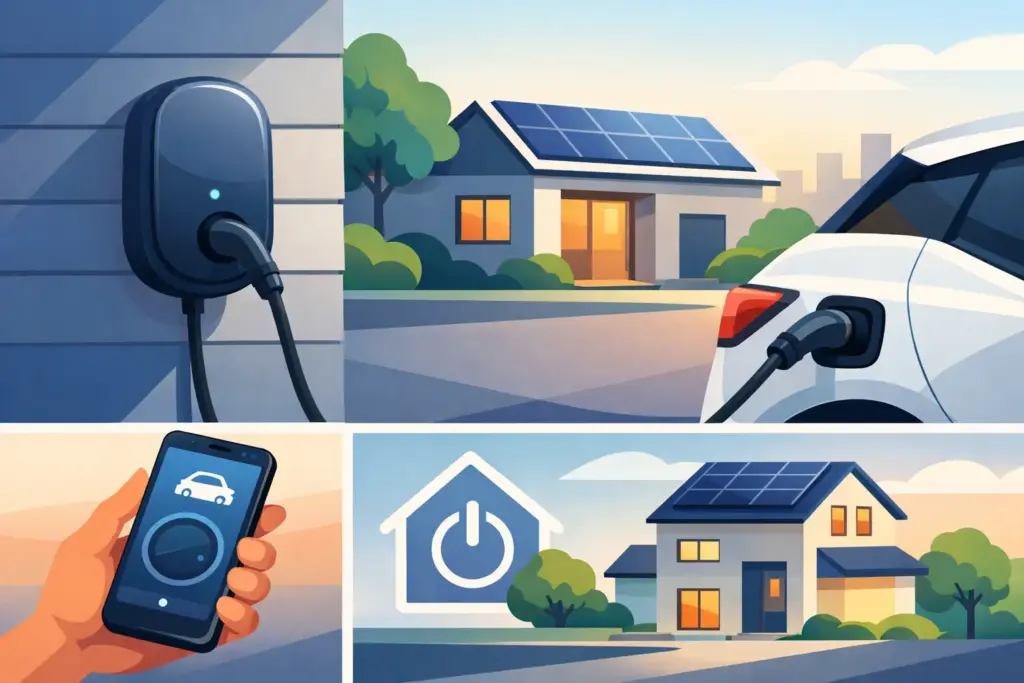
It is fast enough for daily charging, widely compatible, and generally the most sensible option for single-EV households. It also gives access to features that often matter more than raw speed, such as off-peak tariff scheduling, load balancing and solar diversion.
In practice, a well-specified 7.4kW charger installed correctly can be a better purchase than a higher-rated unit that your supply or vehicle cannot fully use.
Fastest does not always mean best
A charger should match the installation environment, not just the marketing headline. If you are choosing for a home, there is little value in chasing maximum kW without checking the rest of the system.
For example, a driver on an EV tariff may care more about reliable overnight charging than shaving a couple of hours off a full charge. A household with limited incoming capacity may need dynamic load management to avoid overloading the supply. A customer with solar PV or battery storage may prioritise integration over peak output.
That is where product selection becomes more technical than it first appears. Features such as PEN fault protection, built-in RDC-DD, CT clamp support, app scheduling and compatibility with tariff-led charging can matter just as much as charging speed. Installers will also be looking at cable run length, protection requirements, earthing arrangement and whether the charger supports the job without extra hardware.
How to choose the right fast home charger
Start with the supply. If the property is single-phase, your practical top end is usually 7.4kW. If it is three-phase, check whether the vehicle can use 11kW or 22kW AC before selecting a higher-powered charger.
Then look at daily mileage and charging habits. If the car is parked overnight and used for ordinary commuting, a 7.4kW unit will cover most needs comfortably. If charging windows are short or multiple vehicles share the same charging point, a higher-capacity setup may be worth exploring.
Finally, pay attention to the wider installation package. A charger is only one part of the job. Protective devices, load management, mounting options, cable accessories and compliance components all affect the finished result. This is where a specialist supplier such as UK EV Installers Shop can make the buying process much more efficient for both end users and trade customers, especially when the charger choice needs to sit alongside the right installation materials.
The best answer is usually not the charger with the biggest number on the box. It is the one that gives you the fastest charging your property and vehicle can genuinely support, with the controls and protection to make that speed useful every day.
Trustpilot Reviews
Future return customer. Never heard of them before so was a bit of a gamble pressing the pay now button but couldn’t…What Car Home EV Chargers Should You Buy?
What car home EV chargers should you buy? Compare charger types, power, cable options, smart features and installation factors for UK homes.Ohme ePod review: a smart home charging pick?
Ohme ePod review for UK EV drivers and installers. We cover charging control, tariff support, installation points and where it fits best.