




James Harding
04/05/2026
Home EV Chargers Explained for UK Buyers
If you are comparing units and specs rather than just picking the first charger you recognise, this guide to home EV chargers explained is the sensible place to start. The right charger is not simply the one with the lowest price or the smartest app. It is the one that suits your vehicle, your property, your electricity supply and the way you actually charge day to day.
For most UK households, home charging is the cheapest and most convenient way to run an EV. But the buying decision can get muddled quickly. Tethered or untethered, 7.4kW or 22kW, solar integration, load balancing, PEN fault protection, tariff compatibility – each feature has a purpose, but not every home needs every feature.
Home EV chargers explained: what a home charger actually does
A home EV charger is a dedicated charging unit that safely supplies power from your property to your vehicle. In most domestic settings, that means an AC charger fixed to a wall or mounted on a post, usually rated at 7.4kW on a single-phase supply.
Strictly speaking, the charger that controls battery charging sits inside the car. The wall unit is better described as EV charging equipment, because it manages the connection, communication and safety functions between the property and the vehicle. In practice, everyone calls it a charger, and that is fine for buying purposes.
The main advantage over a 3-pin socket is not just speed. It is safety, reliability and proper control. A dedicated home charger is designed for regular EV charging loads and, when correctly specified, includes the protection and communication features needed for compliant installation.
The main types of home EV charger
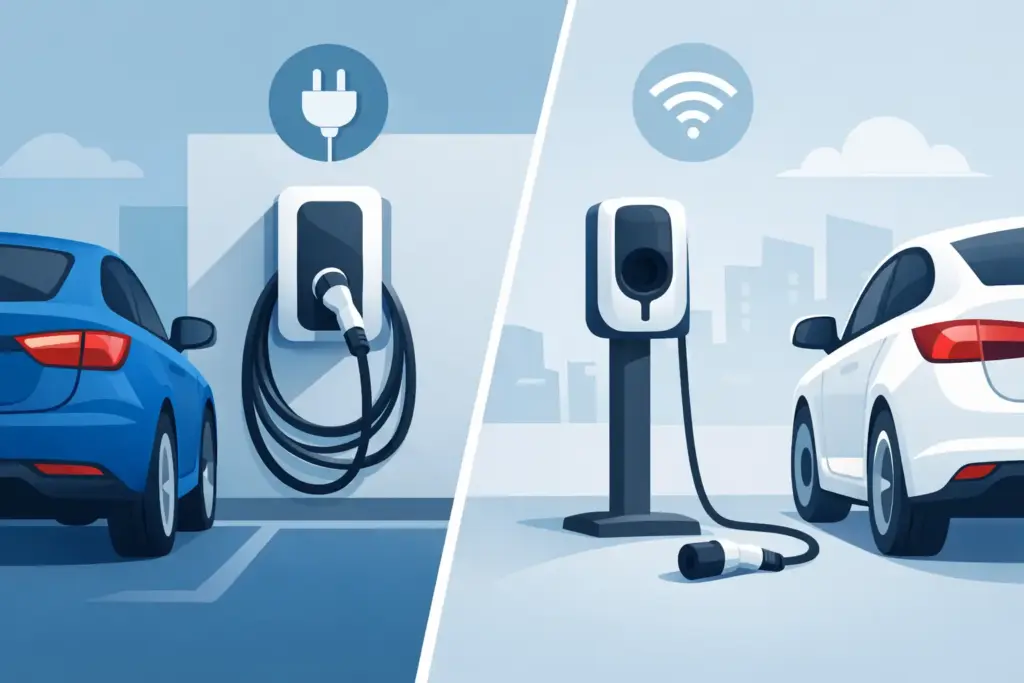
Most homeowners choosing a domestic charger will be deciding between tethered and untethered models first. This affects convenience more than charging performance.
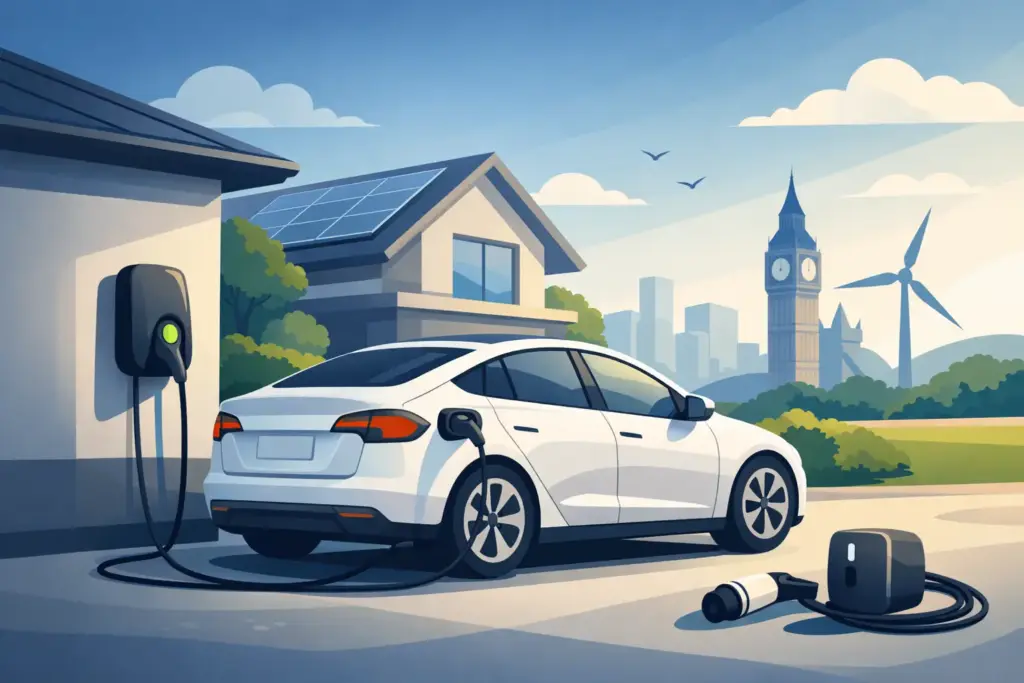
A tethered charger has a fixed cable attached to the unit. It is quick to use and usually suits drivers who charge one vehicle most of the time and want the simplest daily routine. The trade-off is appearance and flexibility. You need to store the cable neatly, and if you change vehicle connector type in future, the fixed lead can become a limitation.
An untethered charger has a socket on the unit instead of a fixed cable. You use a separate charging cable, which is often preferred where a cleaner finish is important or where more than one vehicle may be charged over time. It can be the tidier long-term option, but it adds one more item to handle and store.
You will also see differences in feature set. Some chargers are deliberately simple and focus on core charging. Others are smart chargers with app control, scheduling, usage data, dynamic load management and tariff integration. For many UK buyers, those smart functions are what make home charging genuinely cost-effective rather than merely convenient.
7.4kW, 11kW and 22kW: what speed do you really need?
This is where many buyers overcomplicate the decision. In the UK, the standard home installation is usually a 7.4kW charger on a single-phase supply. For the majority of domestic properties, that is the practical choice.
A 7.4kW charger can typically add around 25 to 30 miles of range per hour, depending on the vehicle and conditions. For overnight charging, that is more than enough for most households. If your EV is parked for eight hours, you are generally recovering a substantial daily or weekly driving requirement without any issue.
An 11kW or 22kW charger may sound better on paper, but it depends on the property supply and the vehicle’s onboard AC charging capability. Many UK homes do not have the three-phase supply needed to make these higher outputs possible. Even if the property does, the vehicle itself may not accept AC charging at that rate. In other words, paying for a higher-rated charger does not automatically mean faster charging.
For installers and technically minded buyers, this is where specification matters. The charging rate is limited by the lowest point in the chain – charger, vehicle or supply. That is why compatibility checks are more useful than headline numbers.
Smart charging features worth paying for
Not every feature is essential, but some are genuinely useful in the UK market.
Scheduled charging is one of the most valuable. If you are on an EV tariff or time-of-use tariff, being able to charge during cheaper off-peak periods can make a noticeable difference to running costs. Some chargers handle this well through their own software, while others rely more heavily on the vehicle app. The cleaner the setup, the less likely you are to end up fighting overlapping schedules.
Load management is also important, especially in properties with heat pumps, electric showers, battery storage or high background demand. Dynamic load balancing helps prevent the charger from drawing too much power when the rest of the property is already using a lot of electricity. For some homes, this avoids nuisance tripping. For others, it can be the difference between a straightforward installation and a more expensive supply upgrade.
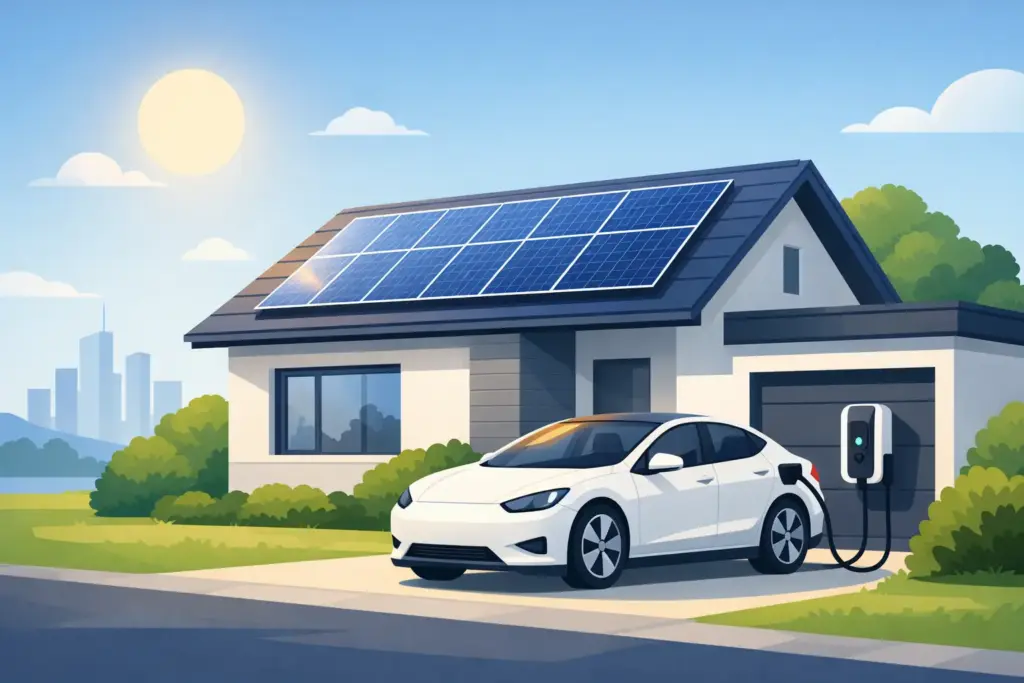
Solar integration is another feature that deserves a closer look. If you have solar PV or plan to add it, a charger that can prioritise surplus solar generation may improve self-consumption. That said, solar-only charging sounds better than it works in some real-world situations. In winter or during poor weather, available surplus may be too inconsistent for practical charging unless the charger allows mixed-grid operation.
Installation requirements and compliance considerations
A home charger is not a plug-and-play appliance. It is fixed electrical equipment and needs to be selected with installation conditions in mind.
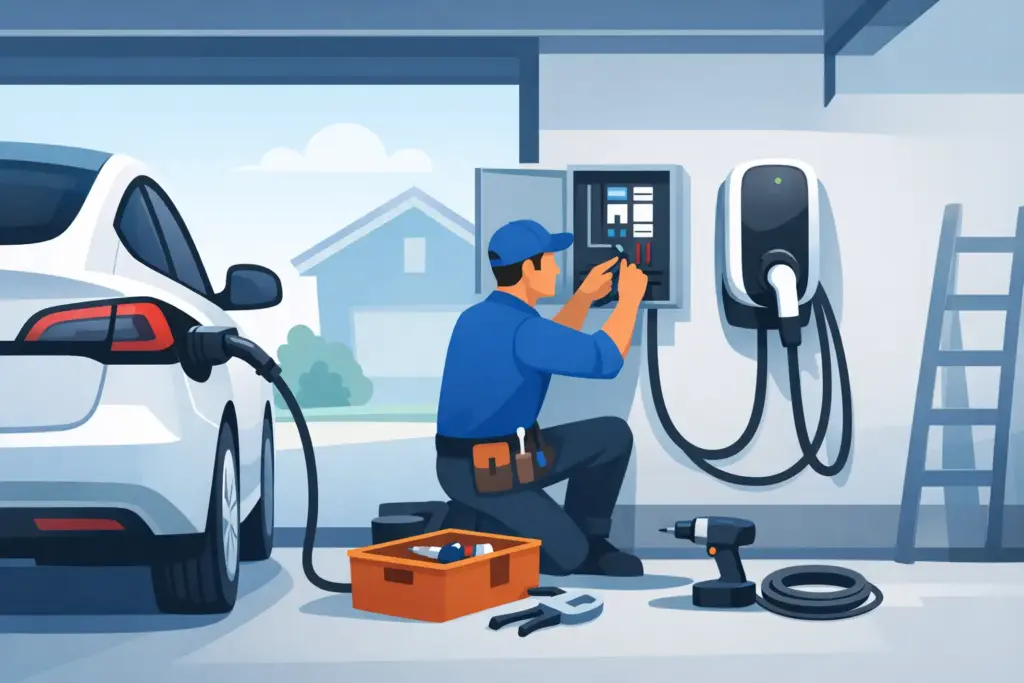
Cable run length, mounting location, Wi-Fi or mobile signal strength, earthing arrangement and spare capacity at the consumer unit all matter. So does whether the charger includes built-in protection features or needs separate devices specified alongside it.
In UK domestic installations, installers will consider requirements such as RCBO protection, surge protection where appropriate, cable sizing and whether PEN fault protection is integrated or needs to be provided separately. This is particularly relevant where the charger is connected to a PME earthing system. Some units include protective measures within the charger, while others require external components.
That matters for more than compliance. It affects the true installed cost. A charger with a lower list price is not always the cheaper project once additional protection and accessories are included.
For trade buyers, this is often where product depth matters most. Being able to source the charger, protective devices, mounting hardware and installation essentials together saves time and reduces the risk of specification gaps.
Choosing the right charger for your vehicle and routine
The best charger depends less on the badge on the front and more on your charging pattern.
If you drive a predictable daily mileage and want the easiest user experience, a 7.4kW tethered smart charger is often the straightforward answer. If the property has two EVs, vehicle changes are likely, or aesthetics are a priority, an untethered unit may make more sense.
If you are specifically trying to cut charging costs, tariff compatibility should be near the top of the list. If you already have solar or battery storage, choose a charger that can work with that setup sensibly rather than treating it as an afterthought. If your property has limited electrical headroom, built-in load management or support for CT clamp-based balancing may be more valuable than premium cosmetic design.
This is also where brand selection tends to come into play. Some brands are known for tariff-led charging, others for design finish, others for installer-friendly commissioning or broader energy integration. There is no universal best option. There is only the best fit for the job.
Home EV chargers explained for installers and specifiers
For professional buyers, a domestic charger is rarely just a charger. It is part of a compliant, efficient install package.
The product decision often comes down to how well the unit handles commissioning, app setup, load management, protection requirements and stock availability. A technically strong charger can still become a poor choice if it creates delays on site, needs multiple extras not obvious at point of order, or complicates handover for the customer.
That is why many installers prefer to source from suppliers that carry both charger brands and the surrounding infrastructure – posts, circuit protection, surge devices, cable management and accessories. UK EV Installers Shop sits neatly into that requirement because the buying process is not limited to front-end charger comparison. It supports complete project specification.
Common mistakes to avoid
The first is buying on charging speed alone. Faster-rated chargers do not always charge faster in a domestic setting.
The second is ignoring installation extras. Protection devices, mounting options and cable runs can materially affect project cost.
The third is assuming every smart charger handles tariffs, solar and load management in the same way. They do not. Similar feature labels can hide very different real-world behaviour.
The fourth is treating the charger as separate from the property. The house supply, earthing arrangement and location are part of the buying decision from the start, not something to sort out later.
A good home charger should fit the vehicle, the electrical installation and the household routine without workarounds. If you get those three things right, the rest of the decision becomes much simpler. Buy for the job you have now, but leave enough flexibility for how you are likely to charge a few years from today.
Can I Use Solar With EV Charger at Home?
Can I use solar with EV charger systems at home? Learn what works, what equipment you need, and the limits of solar…Ohme vs Hypervolt Charger: Which Fits Best?
Ohme vs Hypervolt charger compared for UK homes. See differences in tariffs, solar, app control, design and installation before you buy.Tethered vs Untethered Charger: Which Fits?
Tethered vs untethered charger – compare cable convenience, looks, compatibility and installation needs to choose the right EV charger.