




James Harding
27/05/2026
myenergi libbi review for UK homes
If you are weighing up home battery storage and already know the myenergi ecosystem, a myenergi libbi review usually comes down to one question – does it make financial and practical sense for your property, tariff and installation setup? That is the right place to start, because libbi is not a generic battery aimed at every home. It is a modular AC-coupled system designed to work particularly well where solar, EV charging and energy monitoring all need to talk to each other.
myenergi libbi review: what the system is
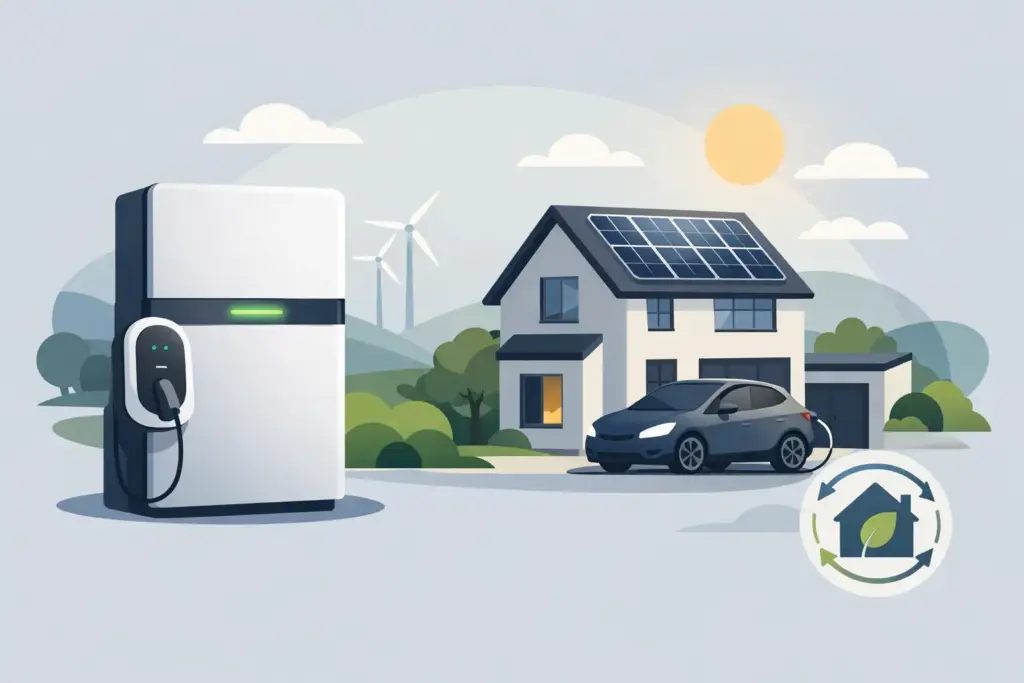
Libbi is myenergi’s modular home battery storage system for UK properties. It is built as an AC-coupled solution, which matters because it can often be added to existing solar systems more easily than a DC-coupled battery. For households that already have PV and do not want to replace the inverter side of the installation, that is a clear advantage.
The system combines a hybrid inverter and stackable battery modules, with capacity and power options depending on the model selected. In plain terms, that gives installers and homeowners more flexibility than a one-size-fits-all battery. A smaller household with modest evening demand can avoid over-specifying, while a higher-consumption property can build a larger system that better supports heat pumps, EV charging or heavier overnight use.
Where libbi stands out is integration with the wider myenergi range. If the property already has a zappi charger, eddi diverter or harvi device, the appeal is obvious. Energy flows can be managed within one brand ecosystem rather than patched together across multiple apps and interfaces.
Who libbi is likely to suit
Libbi is a sensible fit for homes already invested in self-consumption. That usually means one of three scenarios. The first is an existing solar household that exports too much daytime generation and wants to shift more of it into the evening. The second is a home on a time-of-use tariff that wants to charge the battery off-peak and use that stored electricity later. The third is a property combining solar and EV charging, where surplus generation can be better directed rather than wasted back to the grid at a lower export rate.
It can also suit installers who want a recognisable brand with a strong UK profile and a system that sits naturally alongside myenergi charging products. That has practical value on site. Product familiarity, app consistency and fewer compatibility questions can reduce friction during design and handover.
Libbi is less compelling if you have no solar, no EV and no intention of using tariff arbitrage. In that case, battery payback may be slower, and a simpler or lower-cost setup may deserve a closer look.
Performance and day-to-day use
In everyday operation, the value of libbi is not really about headline battery capacity on a spec sheet. It is about how intelligently the system uses stored energy. A good home battery should feel quiet in the background. It should charge when rates are low or solar is abundant, discharge when household demand rises, and do that without constant manual intervention.
That is where myenergi generally understands the UK domestic market well. Homes with EVs often have variable demand profiles. One evening might involve a cooker, immersion heating and vehicle charging, while the next is much lighter. A system tied into broader home energy controls can make better decisions than a battery operating in isolation.
The practical outcome is better self-consumption and potentially lower import costs, but performance still depends on setup. Battery storage does not fix poor system design. If the battery is undersized, it will empty too early. If it is oversized, the extra capacity may sit underused for much of the year. If tariff schedules are not configured properly, the savings case weakens quickly.
Solar compatibility and tariff use
For many buyers, this is the strongest part of any myenergi libbi review. AC coupling makes libbi especially relevant for retrofit solar projects. If a home already has panels and a working inverter, adding storage can be more straightforward than rebuilding the whole solar side around a DC battery platform.
That does not mean every installation is simple. Existing consumer unit capacity, cable routes, available wall space and DNO considerations still matter. Installers will also need to consider how libbi interacts with any EV charger load management, export limitation or other on-site energy devices.
On tariffs, libbi makes most sense where off-peak pricing is attractive enough to justify overnight charging. This is particularly relevant for EV households already using energy tariffs with cheap overnight windows. In those cases, the battery can support both vehicle charging strategy and wider household consumption, depending on system settings and user priorities.
The trade-off is that savings are not automatic. If your off-peak window is narrow, your battery is small, or your evening demand is modest, the financial gain may be less dramatic than marketing claims suggest. Homes with strong daytime occupancy can also benefit less from storage than households empty during solar generation hours and active in the evening.
Backup capability and resilience
Backup power is often where interest increases, but it is also where expectations need to stay realistic. Some buyers assume a home battery automatically keeps the whole property running during a power cut. That is rarely the case without the right backup configuration and essential load planning.
Libbi can offer backup functionality, which is attractive for households wanting resilience as well as bill savings. However, the practical usefulness depends on the loads you expect it to support. Refrigeration, lighting, broadband and selected sockets are one thing. Whole-home backup including high-load appliances is another.
For installers, this is a specification conversation rather than a brochure feature. The backup setup needs to be designed properly, and homeowners should be clear about what stays live and for how long. Used properly, backup is a genuine benefit. Oversold, it becomes a disappointment.
Installation considerations
From an installer’s point of view, libbi benefits from being part of a familiar UK renewable and EV brand. That helps with customer confidence. For homeowners, it often feels less risky buying into a brand they may already know from a zappi charger or other myenergi hardware.
That said, battery installations are never just about the battery. The condition of the existing electrical infrastructure matters. So does inverter location, ventilation, mounting position and route planning. If the home already has solar, installers need to assess whether the current setup supports a clean and compliant addition.
This is where a specialist supplier matters. Being able to source the battery system alongside protective devices, isolation, circuit protection and any wider renewable components saves time and reduces the chance of mismatched parts arriving on site.
Strengths and weak points
The main strength of libbi is ecosystem logic. If you already use myenergi products, the system makes sense quickly. The second strength is modularity. Not every property needs the same capacity, and a scalable setup is easier to tailor. The third is retrofit appeal. AC-coupled batteries remain a strong option for homes with existing PV.
The weaker points are mostly about value relative to alternatives. Buyers comparing libbi with other battery systems may find that headline cost, usable capacity or feature set needs careful checking rather than assuming brand loyalty settles the question. If you are starting from scratch with a brand-new solar installation, a DC-coupled route may also be worth comparing because it can be more efficient in certain designs.
App preference is another factor. Some users like staying within one ecosystem. Others prefer platform-agnostic setups with broader third-party options. Neither is automatically better – it depends on whether you prioritise integration simplicity or flexibility.
Is libbi good value?
Good value is not the same as low upfront cost. Libbi can be good value where it solves multiple problems at once – better solar self-use, off-peak charging, EV-related energy management and some backup resilience. In those cases, the combined benefit may justify the spend more convincingly than a battery bought on storage alone.
Where value becomes less clear is in simpler homes with low evening consumption or limited solar generation. If the battery rarely cycles deeply, payback stretches. If your export tariff is strong and your import rates are stable, the case for storage can also weaken.
For trade buyers and informed homeowners, the right comparison is not just pounds per kilowatt-hour of storage. It is total system suitability, compatibility, installation complexity and long-term usability.
Final view on this myenergi libbi review
Libbi is a credible battery storage option for UK homes, especially where myenergi products are already in place or where solar and EV charging need to work together more intelligently. It is not the cheapest route to storage in every case, and it is not automatically the best fit for every property. But for the right home, it is a practical, well-aligned system with clear strengths in retrofit solar and ecosystem integration.
The smart move is to size it around real household demand rather than ambition. Get that part right, and libbi has a much better chance of feeling like a useful energy tool rather than an expensive extra.
What kW Are Home EV Chargers?
What kW are home EV chargers? Learn the common 3.6kW, 7kW and 22kW options, what suits UK homes, and what affects charging…How to Lock Home EV Charger Access
Learn how to lock home EV charger access with app settings, RFID, cable locks and physical measures to reduce misuse and improve…What Speed Are Home EV Chargers?
What speed are home EV chargers? Learn the typical 3.6kW, 7kW and 22kW charging rates, what affects speed, and what suits UK…