




James Harding
08/05/2026
How to Wire Home EV Charger Safely
If you are researching how to wire home EV charger systems, the first thing to get clear is this: in the UK, wiring a charger is not the same as adding a socket or swapping a light fitting. An EV charge point is a high-load item of fixed electrical equipment, and the installation has to suit the property’s supply, earthing arrangement, circuit capacity and charging demand.
For homeowners, that usually means understanding what is involved before you buy. For electricians and EV installers, it means selecting the right charger, cable route and protection devices so the job is compliant first time. The detail matters because a charger that looks straightforward on paper can become more involved once you check supply limitations, PME conditions, spare way availability and whether load curtailment is needed.
What wiring a home EV charger actually involves
At a practical level, wiring a home charger means installing a dedicated final circuit from the consumer unit or distribution board to the charge point. In most domestic settings, that charger will be a 7.4kW single-phase unit, although three-phase hardware may be relevant on larger properties or where futureproofing is a priority.
That dedicated circuit must be correctly sized for the charger’s maximum demand and installation method. It also needs suitable circuit protection, isolation and, where required, additional safety measures for earth fault conditions and open PEN fault protection. This is why product selection cannot be separated from the wiring design. The charger, protective devices and installation accessories all need to work together.
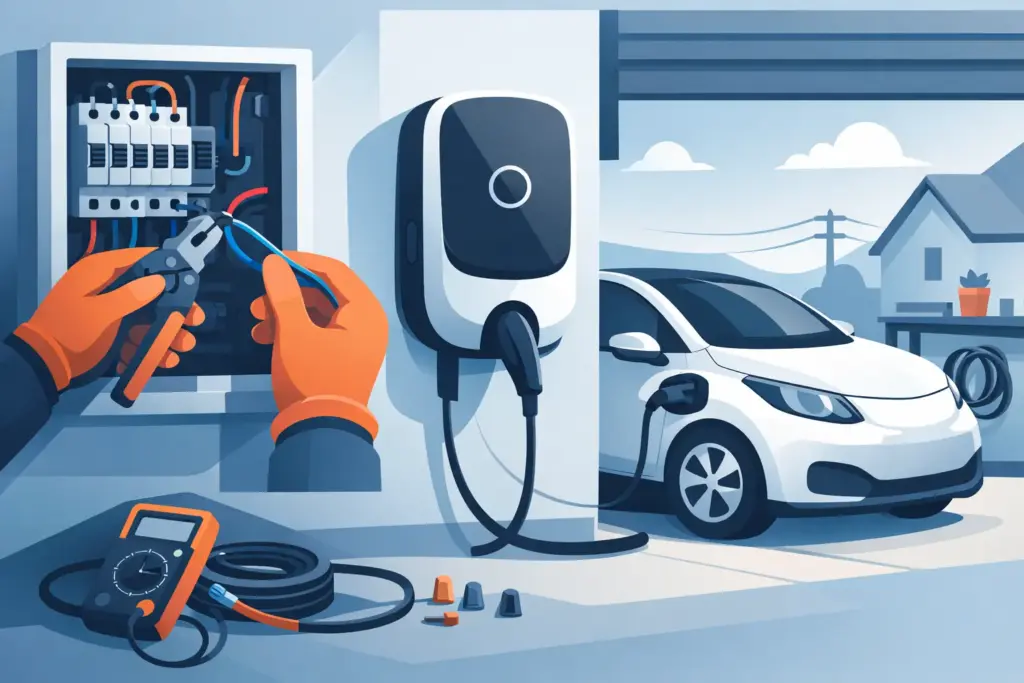
The broad sequence is simple enough. You assess the supply, choose the charger, size the cabling, fit protection, route the circuit, connect the unit, test the installation and configure any smart charging or load balancing features. The reality is that each of those steps can vary depending on the property.
Before you wire a home EV charger, check the supply
The starting point is always the incoming electrical supply. In many UK homes, the main questions are whether the property is single-phase, what the main fuse rating is, what earthing system is present and whether the consumer unit has the capacity for an additional high-load circuit.
A typical 7.4kW charger draws around 32A. On a modern installation with a healthy supply and a suitably rated consumer unit, that may be straightforward. On an older property, it may not be. If the existing board is full, if tails need upgrading, or if the installation is already carrying substantial load from electric showers, heat pumps or cooking appliances, you may need load management rather than a simple direct addition.
For installers, this is where a proper survey avoids call-backs. For homeowners, it is the point at which assumptions tend to fail. A charger is not chosen on appearance alone. It must fit the site electrically as well as physically.
How to wire home EV charger circuits with the right cable and protection
Cable sizing depends on several factors, not just the charger rating. Current demand, cable run length, installation method, grouping, ambient temperature and voltage drop all need to be considered. For a standard 32A single-phase charge point, the cable often used is 6mm², but that is not a universal answer. Longer runs or challenging routes can change the calculation.
Protection also needs careful attention. In many installations, an RCBO is used to provide overcurrent and residual current protection for the dedicated circuit. The exact protection arrangement depends on the charger specification because some units include built-in RDC-DD or equivalent DC leakage protection, while others require different upstream arrangements. Choosing the wrong protective device can create compliance problems or nuisance tripping.
An isolator is also typically part of the setup, giving a means of safe local isolation for maintenance or replacement. Surge protection may also be required depending on the installation and the wider board arrangement. On jobs where speed matters, having charger, RCBO, enclosure components and accessories specified together saves time and reduces mismatched parts on site.
Earthing, PME and why EV charger wiring needs extra care
Earthing arrangements are one of the biggest reasons EV charging installations need specialist attention. Where a TN-C-S supply is present, the risks associated with an open PEN conductor must be addressed. This is a known issue in EV charging because exposed-conductive-parts and the vehicle itself may become dangerous under certain fault conditions.
That is why many installers use charge points with integrated open PEN fault protection, while others may use separate protection devices depending on the equipment and design. The right route depends on the charger model, the site conditions and the installation strategy. There is no one-answer approach that suits every job.
For homeowners, the main point is simple. If an installer talks about PME, PEN fault detection or special earthing considerations, that is not unnecessary complication. It is a core part of making the charger safe and compliant.
Consumer unit position, cable route and charger location
The neatest charger position is not always the easiest one to wire. A charger at the front drive may be convenient for the car, but if the consumer unit is at the rear of the property, cable routing can become the main challenge.
Installers will usually weigh cable length, external containment, wall penetrations, clipping routes and visual finish before settling on a final position. A slightly different mounting point can reduce cable run, improve appearance and keep labour under control. That matters on fixed-price domestic work and even more on larger properties where cable distance quickly affects material and install time.
Charger height, impact risk and ease of use also need consideration. If tethered cable storage will be awkward, or if the charging lead will cross a walkway, the practical user experience may be poor even if the electrical design is sound.
Smart charging and load balancing change the wiring plan
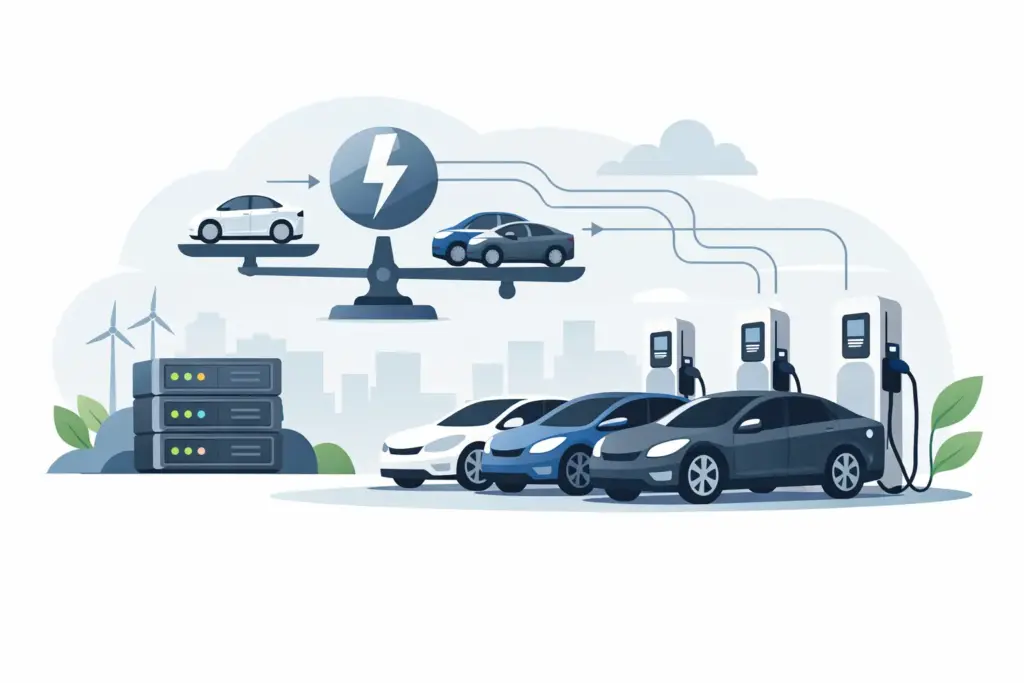
Modern home chargers are increasingly selected for tariff compatibility, app control and solar integration, but those features can also influence the wiring method. Dynamic load balancing is a common example. If the charger needs to monitor whole-house demand, a CT clamp or meter arrangement may have to be fitted near the incoming supply.
That adds another layer to the install, especially if meter tails are awkward to access or the board arrangement is tight. Likewise, if the homeowner wants solar diversion, battery interaction or future vehicle-to-home capability, product choice at the start becomes more important. A lower-cost charger can become an expensive decision if it cannot support the control features needed later.
This is where a product-led approach helps. The charger should be chosen with the protection devices, load management components and intended usage pattern in mind, not treated as a standalone box.
DIY vs professional installation
Anyone asking how to wire home EV charger equipment is often trying to work out whether they can tackle the job themselves. In practice, domestic EV charger installation in the UK is a professional task. It requires design, testing, certification and compliance with the relevant regulations, including notification requirements where applicable.
That does not mean homeowners should stay out of the decision-making. Quite the opposite. It is sensible to understand charger ratings, cable routes, mounting preferences and whether your property may need extra protection or load management. But the actual fixed wiring, testing and sign-off should be handled by a competent electrician or EV installer.
For trade buyers, the difference is that the charger job is only as efficient as the parts list. If the survey identifies a need for RCBOs, surge protection, PEN fault protection, mounting hardware and load management accessories, ordering the full installation package together avoids delay.
Common mistakes when wiring a home EV charger
The most common problems are not dramatic failures. They are specification mistakes. A charger is chosen without checking earthing requirements. The cable run is priced too optimistically. The board has no suitable spare way. The protective device does not match the charger’s internal protection arrangement. Load balancing is needed but has not been allowed for.
Another regular issue is underestimating the property’s future demand. A household adding EV charging today may soon add solar, battery storage or a heat pump. If the install is boxed in from the start, upgrading later becomes harder than it needs to be.
For that reason, there is value in planning beyond the charger itself. Even if the first installation is a straightforward 7.4kW domestic charge point, choosing equipment with sensible compatibility and expansion options can make the job age better.
Choosing the right kit for the job
The charger is only one part of the installation. A proper home EV charging setup may also require circuit protection, surge protection, isolators, mounting posts, CT clamps, cable management and branded accessories that suit the selected unit. For installers, sourcing those items from one supplier is a practical advantage. For homeowners, it usually leads to a cleaner specification and fewer substitutions.
At UK EV Installers Shop, that matters because the buying decision is rarely just brand versus brand. It is more often charger plus protection, charger plus tariff compatibility, or charger plus solar and load management. The right answer is usually the one that fits the property and the intended use with the least compromise.
If you are planning a home charge point, treat the wiring design with the same care as the charger choice. A well-specified installation is easier to fit, easier to certify and far more likely to perform properly over the long term.
Choosing a Commercial DC Charger
Choose the right commercial dc charger for your site with clear guidance on power, grid capacity, payments, connectors and installation needs.How to Choose Home EV Charger
Learn how to choose home EV charger options by matching power, tariffs, cable type, safety and installation needs for your vehicle and…Hypervolt Home Pro review for UK buyers
Hypervolt Home Pro review for UK buyers. See charging speed, smart features, installation factors and whether this home EV charger is worth…