




James Harding
28/04/2026
How to Choose Home EV Charger
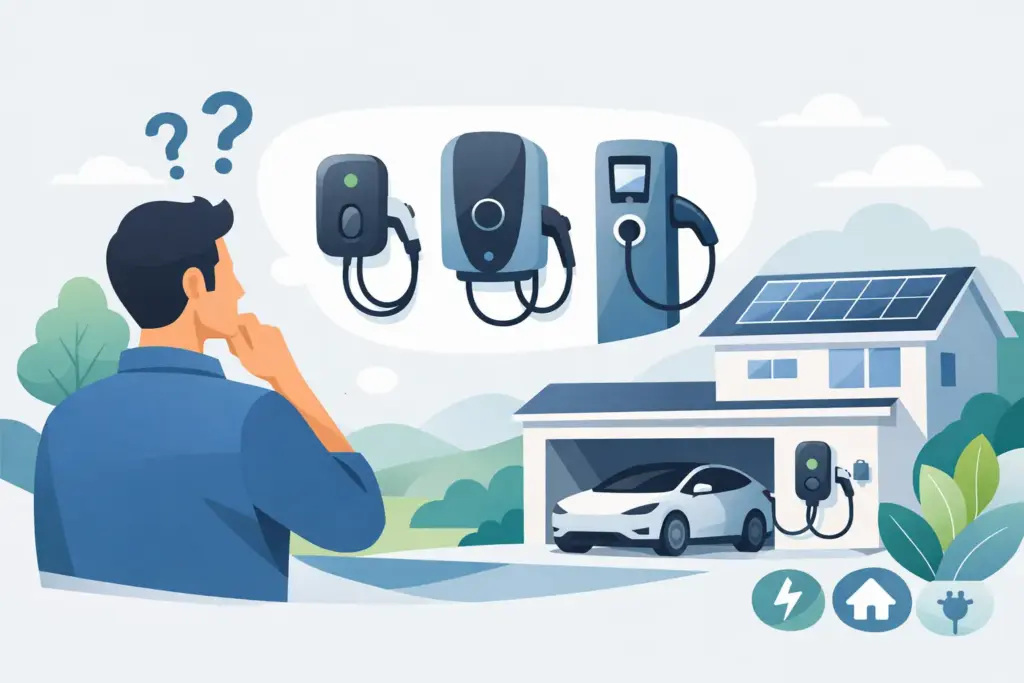
The wrong home charger usually looks fine on paper. The problems only show up later – awkward cable reach, poor tariff integration, limited load control, or an installer flagging extra protection you did not budget for. If you are working out how to choose home EV charger equipment for a UK property, the best place to start is not with the brand name. It is with your vehicle, your supply, and how you actually plan to charge.
For most homes, the decision comes down to a handful of practical questions. Do you want the fastest sensible AC charging available at home? Do you need a tethered cable for convenience or a socketed unit for flexibility? Are you trying to take advantage of an EV tariff overnight, or do you want a charger that can work with solar and battery storage as well? Once those answers are clear, the shortlist becomes much easier to manage.
How to choose home EV charger power and charging speed
In the UK, a standard domestic installation will usually be a 7.4kW single-phase charger. That is the default for a reason. It offers a strong balance of charging speed, installation practicality and compatibility with most homes. For many drivers, an overnight charge at 7.4kW is more than enough to replenish daily mileage comfortably.
A 22kW charger sounds more appealing, but it is not automatically the better option. It normally requires a three-phase supply, which most UK homes do not have, and your vehicle must also be able to accept 22kW AC charging to make full use of it. If the property is single-phase, fitting a 22kW unit will not deliver 22kW performance. That is where buyers can spend more without gaining a real benefit.
Vehicle charging capability matters just as much as charger output. Some cars will only accept lower AC rates, while others can take the full 7.4kW on single-phase. The useful question is not simply, “What is the biggest charger I can buy?” It is, “What charging speed can my vehicle and property genuinely support?”
Match the charger to your tariff and charging habits
For many households, energy tariff compatibility is what separates a good charger from a genuinely cost-effective one. If you are on, or planning to move to, an EV tariff with cheaper overnight electricity, smart charging features should sit high on your list.
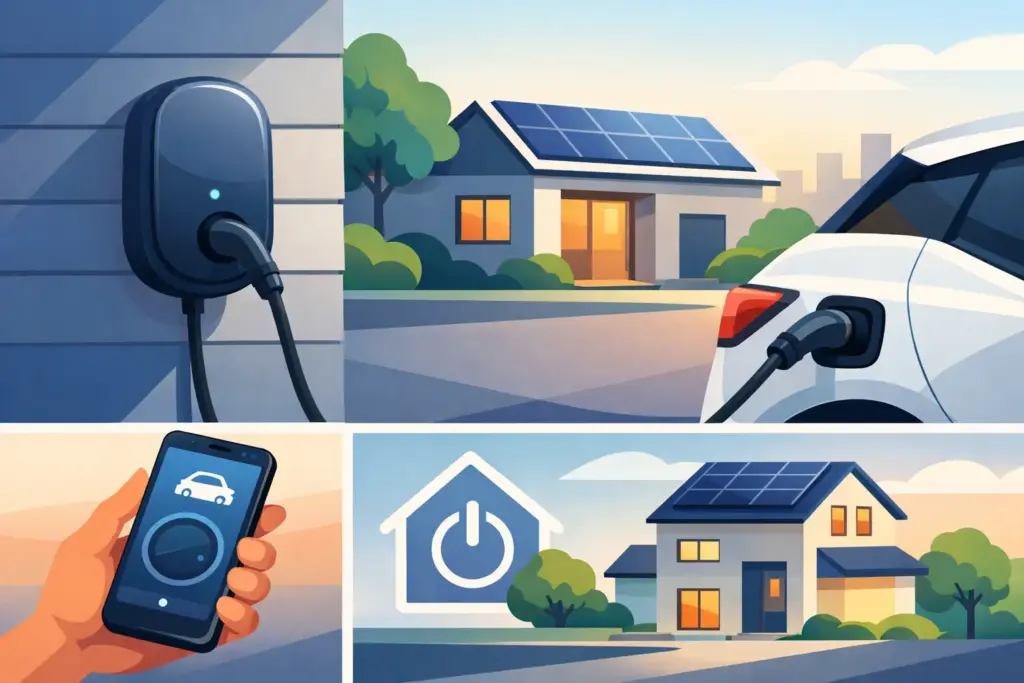
A smart charger can schedule sessions for off-peak hours, which helps reduce running costs without any daily effort. Some units also offer app control, usage data and charge session management that make it easier to monitor consumption. That is useful for homeowners, but it is also valuable for installers advising clients who want a charger that will remain fit for purpose as tariffs evolve.
Not all smart features are equal. Some chargers integrate more smoothly with specific tariffs, and some offer stronger scheduling logic than others. If low-cost overnight charging is the goal, check whether the charger is known for tariff-friendly operation rather than assuming every app-controlled unit behaves the same way.
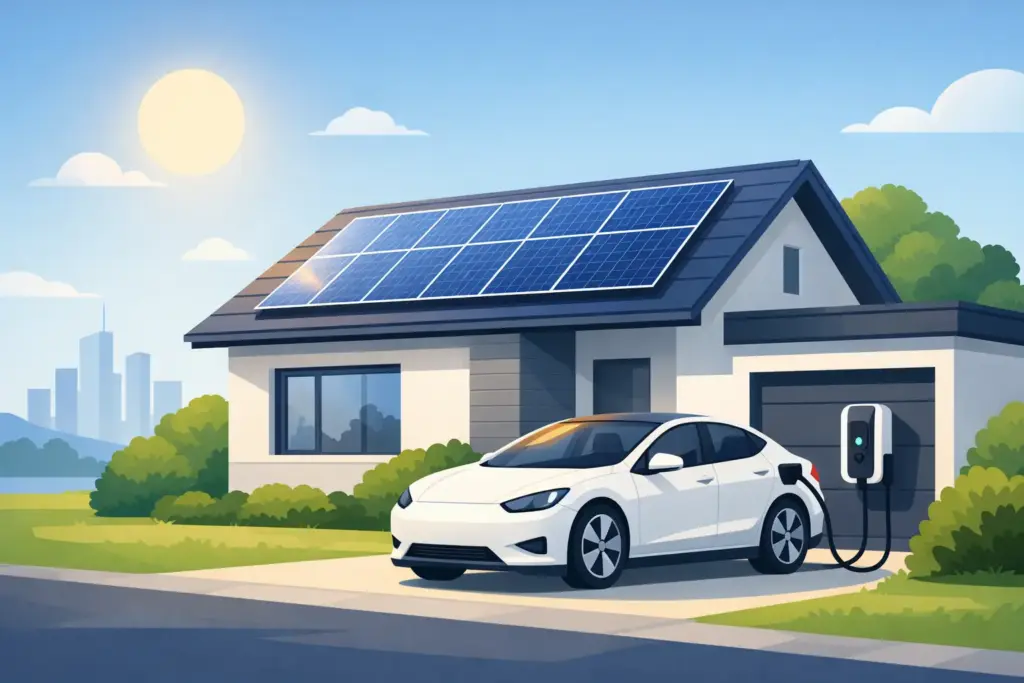
If the property has solar PV or battery storage, the choice becomes more specific. A charger with solar diversion or energy management features can make much better use of self-generated power. That can be a strong reason to choose one model over another, especially where the homeowner wants the charger to sit neatly within a wider electrification setup rather than operate as a standalone device.
Tethered or untethered matters more than many buyers expect
This is one of the most overlooked parts of how to choose home EV charger products, yet it affects day-to-day use every time you plug in.
A tethered charger has a fixed cable attached. It is convenient, quick to use and often the preferred option for households with one regular vehicle and a driveway layout that suits the cable length. If ease of use is the priority, tethered often wins.
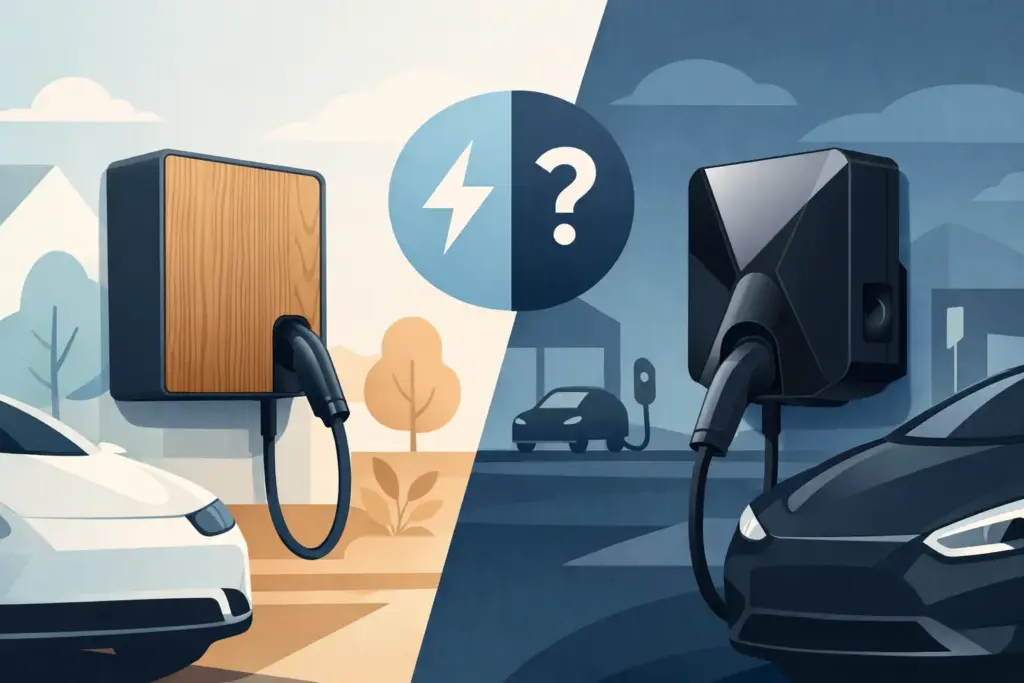
An untethered, or socketed, charger gives a cleaner look and more flexibility. You use a separate charging cable, which can be useful if you change vehicles, want a neater wall-mounted unit, or need a socketed configuration for a particular site preference. For some buyers, especially where appearance is important, that flexibility is worth the small extra effort of handling a separate cable.
The catch is practical reach. A beautifully designed charger is no use if the cable struggles to reach the vehicle inlet without stretching across a path or parking awkwardly. Always think about where the car will be parked, where the charger can be mounted, and whether the cable arrangement will still work if you change vehicle later.
Do not ignore your property’s electrical setup
A charger is only one part of the job. The electrical characteristics of the property often determine what can be installed efficiently and compliantly.
Load management is a good example. In homes with limited spare capacity, dynamic load balancing can prevent the charger from overloading the supply when other high-demand appliances are running. That can be particularly relevant in properties with electric showers, heat pumps, immersion heaters or cooking loads that overlap with charging times.
Earthing arrangements also matter. Depending on the installation method and the charger selected, additional protection may be required, including solutions related to open PEN fault protection. This is where a charger that looks competitively priced at first glance may not be the cheapest once the full installation specification is considered.
For trade buyers and informed homeowners alike, it makes sense to think in terms of the complete installation package: charger, protection, load management, mounting options and cable routing. A unit that supports the right compliance pathway with fewer add-ons may represent better value overall.
Brand, app quality and support are not secondary details
Once the technical fit is right, brand choice becomes easier to assess. Well-known charger manufacturers have earned their place because they offer dependable hardware, established app ecosystems and ongoing product support. In a market where software, tariff compatibility and firmware updates all matter, that carries real weight.
The app experience is especially important for smart charging. If you plan to schedule charging, monitor costs or switch charging behaviour around off-peak windows, the software interface should be straightforward and reliable. A charger can be electrically sound and still become frustrating if the app is poor.
This is why many buyers stay with recognised names such as Ohme, Andersen, Hypervolt, myenergi and Zaptec. The right brand will depend on what matters most – tariff integration, design, solar compatibility, cable format or installation flexibility – but buying on specification and support is usually a safer route than buying on headline price alone.
Think about installation location and everyday use
Home EV charging is practical equipment, not just a wall box. Weather exposure, mounting height, cable management and physical access all shape how well the installation works long term.
If the charger will be fitted at the front of a property, appearance may matter more. If it is being installed down the side of a house or in a parking bay, cable length and mounting position may be the bigger concern. For detached garages or outbuildings, the cable run back to the consumer unit may affect installation cost enough to influence charger choice.
You should also consider who will use it. A household with one confident EV owner may be happy with a slightly more technical setup. A shared household, holiday let or multi-driver home often benefits from the simplest possible plug-in routine.
Price matters, but total value matters more
There is no single best charger for every buyer because value depends on the full job. A lower-cost charger can be the right answer where the vehicle is straightforward, the property is electrically simple and the main requirement is reliable overnight charging. Equally, a more premium unit can be the better buy if it avoids compromises on tariff integration, aesthetics, solar functionality or protective features.
It is also worth separating charger price from installation cost. Some products are quicker to install or work better with the protection and accessories already planned for the job. For installers, that can improve job efficiency. For homeowners, it can reduce surprises once the site assessment is complete.
A specialist supplier with access to chargers, circuit protection, mounting posts, load management and accessories in one place can make that process more straightforward. That is particularly useful when the purchase needs to cover more than just the charger itself.
A practical way to narrow the shortlist
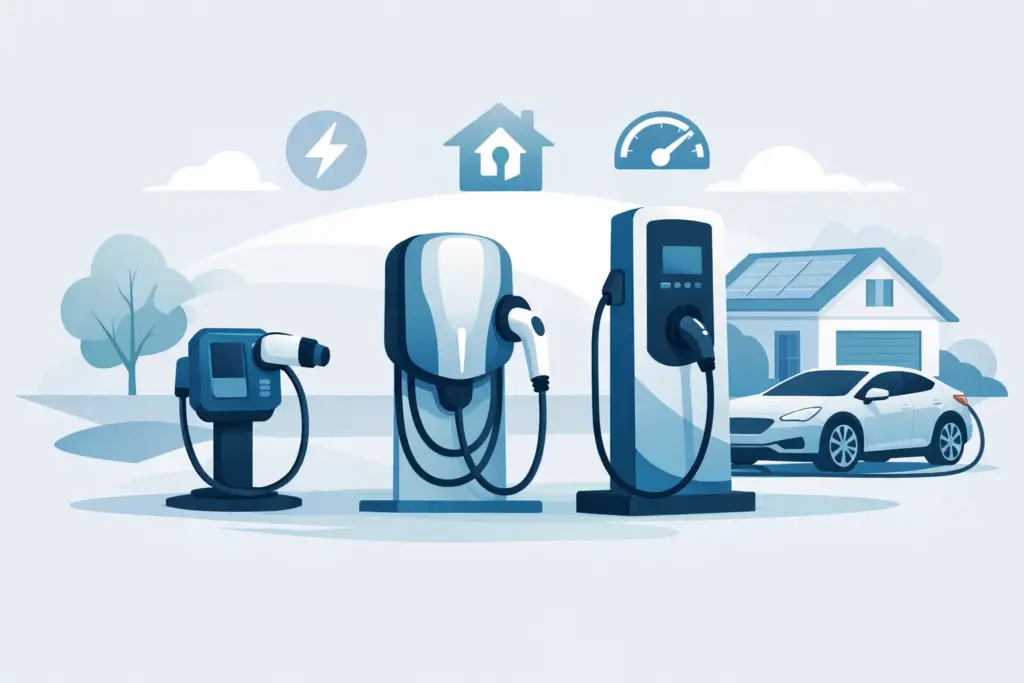
If you want to make a confident choice quickly, filter the options in this order. First, confirm your property supply and the charging rate your vehicle can accept. Next, decide whether smart tariff charging is essential, and whether solar or battery integration matters now or later. Then choose tethered or untethered based on parking layout and convenience. After that, compare recognised brands on app quality, design, compliance features and installation suitability.
That approach removes a lot of noise from the buying process. It also helps avoid the two most common mistakes: buying purely on appearance, or buying purely on price.
A home charger should fit the vehicle, the property and the way the site will be used every week. If those three line up, the decision tends to be clear – and the charger will still feel like the right one long after installation day.
What Is a Home EV Charging Station?
What is a home EV charging station? Learn how it works, charger types, power ratings, installation needs and what UK buyers should…Andersen vs Zaptec charger: which suits you?
Andersen vs Zaptec charger compared for UK homes and installers. See differences in design, cable setup, smart features and fit for each…Hypervolt Home Pro review for UK buyers
Hypervolt Home Pro review for UK buyers. See charging speed, smart features, installation factors and whether this home EV charger is worth…