




James Harding
06/05/2026
What Speed Are Home EV Chargers?
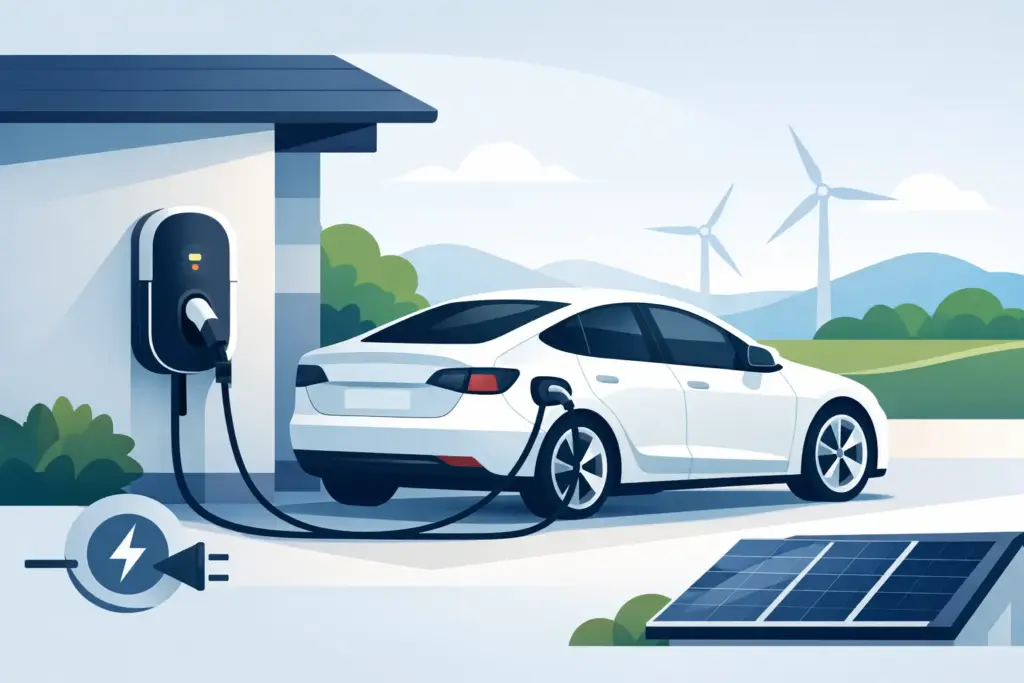
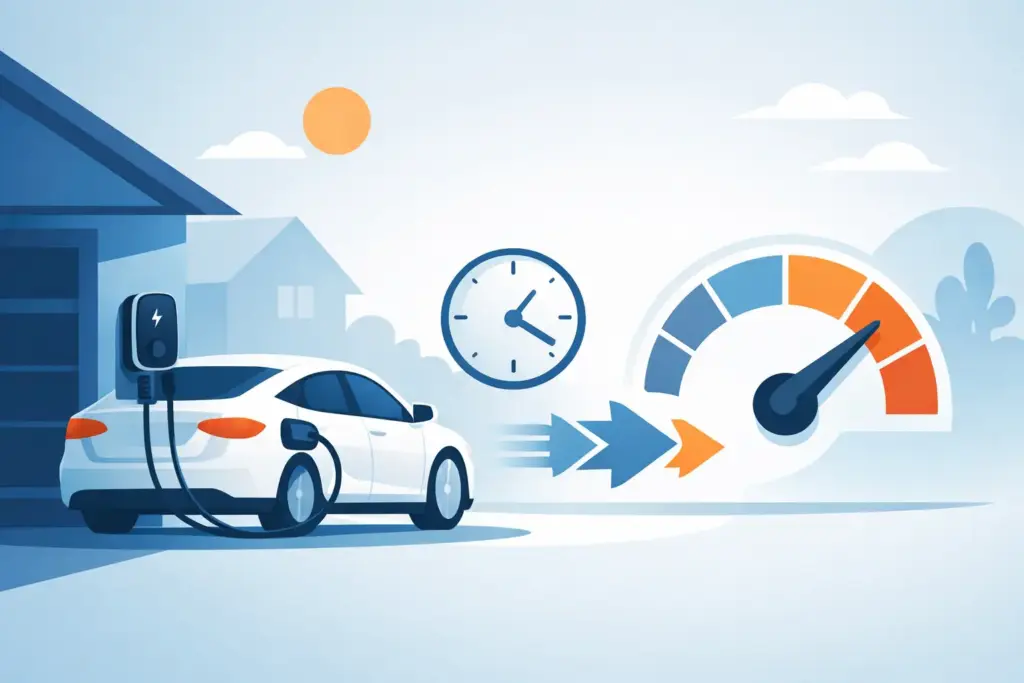
If you are asking what speed are home EV chargers, the short answer is that most UK homes charge at either 3.6kW or 7kW, while 22kW home charging is possible in some cases but far less common. The right answer for your property depends on your electrical supply, the charger you choose, and how quickly your vehicle can actually accept AC power.
That matters because charger speed is often described as if one figure tells the whole story. It does not. A 7kW charger does not always mean your car will gain the same miles per hour as someone else’s, and a higher-rated unit is not automatically the better buy if your installation cannot support it.
What speed are home EV chargers in the UK?
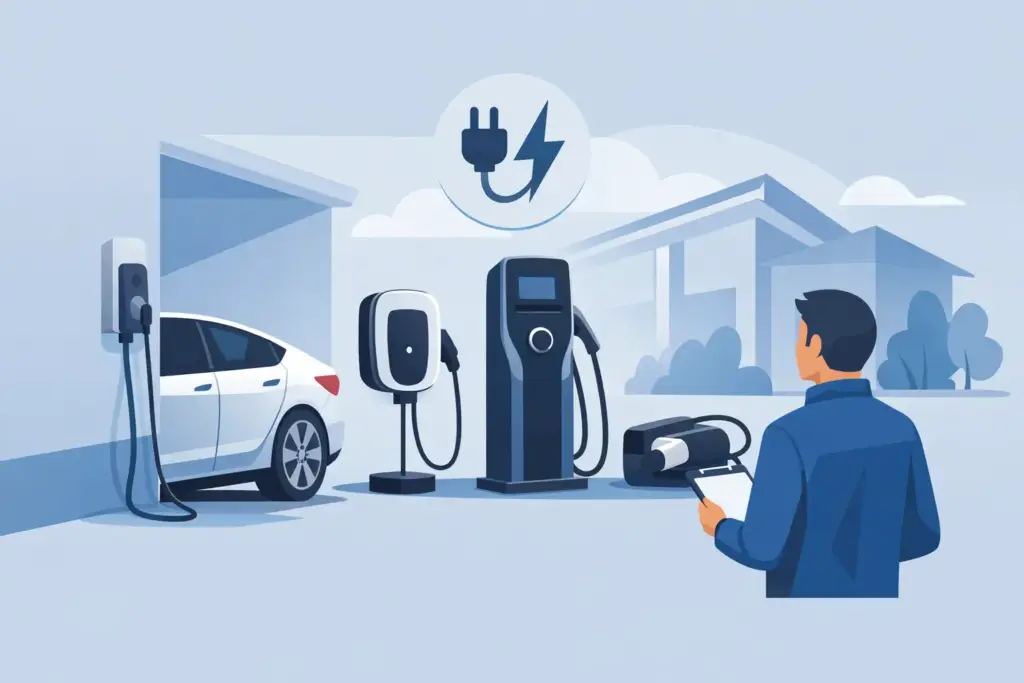
For domestic charging, the main speeds you will come across are 2.3kW from a standard 3-pin socket, 3.6kW from a lower-powered dedicated charger, 7kW from a standard single-phase wall charger, and 22kW from a three-phase setup. In practice, 7kW is the usual benchmark for UK home EV charging because most residential properties have a single-phase supply and most home charge points are designed around that.
A 3-pin socket is the slowest option and is generally better viewed as occasional or backup charging rather than a long-term daily setup. It can be useful if no dedicated charger is installed yet, but charge times are long and it is not the most practical solution for regular EV use.
A 3.6kW charger is faster than a socket and may suit low-mileage drivers or properties where supply constraints make 7kW less straightforward. Even so, for most homeowners buying a new unit, 7kW remains the most popular and practical choice.
A 22kW home charger sounds attractive on paper, but it only makes sense where the property has a suitable three-phase supply and the vehicle supports 22kW AC charging. Many homes do not have three-phase, and many EVs cannot take the full 22kW AC input anyway.
Charger speed and actual charging speed are not always the same
This is where many buying decisions go off course. The charger rating is only one part of the setup. Your EV’s onboard charger sets the maximum AC charge rate the vehicle can accept, so the real charging speed is whichever limit is lowest.
For example, if you install a 7kW charger but your vehicle can only accept 3.6kW AC, it will charge at about 3.6kW. If your car can accept 11kW AC but your house only supports a 7kW single-phase charger, you will still charge at 7kW at home. If you fit a 22kW charger at a three-phase property but the vehicle only accepts 11kW AC, then 11kW is your ceiling.
Battery size also affects how charging feels in day-to-day use. A smaller battery may fill overnight even on a slower charger, while a larger battery used for longer daily mileage benefits more clearly from a 7kW setup.
How long does each home EV charger speed take?
Charge time depends on battery size, state of charge, charging losses and vehicle limits, but rough comparisons are still useful.
A 2.3kW 3-pin socket may add roughly 8 to 10 miles of range per hour. For a larger EV battery, a full charge can take well over 24 hours.
A 3.6kW charger may add around 15 miles of range per hour, depending on the car. That can be enough for drivers covering modest daily distances and charging overnight.
A 7kW charger often adds around 25 to 30 miles of range per hour. For many households, that means an overnight charge comfortably restores typical daily use, even with a medium or large battery EV.
A 22kW charger can be much faster, but only where both the site and vehicle support it. In the right conditions, it may add around 60 to 75 miles of range per hour, though this is not a standard domestic scenario.
These figures are useful for planning, but buying decisions should be based on your own vehicle, mileage and electrical setup rather than headline speed alone.
Why 7kW is usually the standard answer
When people ask what speed are home EV chargers, they are usually really asking what speed should I expect from a proper home installation. For most UK homes, the answer is 7kW.
That is because 7kW chargers work well with the single-phase supply found at most properties, offer a strong improvement over socket charging, and suit overnight charging patterns. They also give a broad choice of products across tethered and untethered formats, smart tariff-compatible models and units with load management or solar integration.
For homeowners, this usually means a better balance of installation practicality, charging convenience and future usability. For installers, it means a familiar, compliant and widely compatible configuration with strong product availability and accessory support.
What affects home EV charging speed?
The electrical supply is the first factor. Single-phase properties typically support up to 7kW AC charging, while three-phase properties can potentially support 11kW or 22kW charging depending on the charger, the distribution arrangement and the vehicle.
Your vehicle’s onboard AC charger is the second factor. Some EVs accept 7kW on single-phase and 11kW on three-phase, while others are limited to lower AC rates. That is why checking vehicle specification before buying is essential.
The charger itself matters too. Not every unit is built for every supply type, and some products are better suited to particular use cases such as dynamic load balancing, off-peak tariff scheduling or solar diversion.
Then there is the wider installation. Consumer unit capacity, earthing arrangement, cable run, PME requirements, local DNO considerations and whether load management is needed can all influence what is practical on site. A charger is never just a wall box. The supporting protection and installation design are part of the charging speed conversation.
Is a faster home charger always worth it?
Not necessarily. If you drive 20 to 30 miles a day and can charge overnight, a 7kW charger is usually more than enough. Even a 3.6kW unit may cover that usage in some households. Paying for higher theoretical speed only makes sense if your supply, vehicle and charging pattern can use it.
There is also a cost and complexity angle. A three-phase installation is a different proposition from fitting a standard single-phase home charger. If the property does not already have the right supply, the extra work can outweigh the benefit for many domestic users.
On the other hand, there are cases where higher-speed AC charging at home is justified. Larger properties, premium builds with three-phase infrastructure, households with multiple EVs, or drivers with high daily mileage may see clear value in it. The same applies where an installer is specifying a charger for a property designed around broader electrification, including solar and battery storage.
Choosing the right speed for your property
The best starting point is not the highest kW figure. It is your real charging need. Think about how many miles you drive each week, how long the vehicle is parked at home, whether you want to use off-peak tariffs, and what your vehicle can accept on AC.
If you want a dependable default choice, 7kW is the answer for most UK homeowners. It fits the majority of domestic electrical supplies, gives sensible overnight charging performance and opens up a wide choice of smart charger models.
If you are dealing with supply limitations, lower daily mileage or a more constrained installation, 3.6kW can still be a valid option. If you have three-phase available and a vehicle that can use it, 22kW may be worth considering, but only after checking the full installation and cost picture.
For trade buyers and installers, that same logic applies at specification stage. Product selection should follow the site conditions and vehicle requirements, with the right protective devices, load balancing and accessories included from the outset. That is often where a specialist supplier such as UK EV Installers Shop adds value, because charger choice is only part of a compliant, job-ready setup.
What speed are home EV chargers best bought at?
There is no single best speed for every property, but there is a most suitable speed for each use case. For the typical UK home, 7kW is the practical sweet spot. It is fast enough for overnight charging, common across leading charger brands, and realistic for standard residential supply arrangements.
If your setup points elsewhere, that is not a problem. A slower charger can still be the right technical and commercial decision, and a faster one is only worthwhile if the rest of the system supports it. The useful question is less about the biggest number on the spec sheet and more about what will work reliably, compliantly and cost-effectively on your property.
Get that part right and home charging becomes straightforward – plug in, charge overnight, and start the next day with the range you actually need.
What Is a Home EV Charging Station?
What is a home EV charging station? Learn how it works, charger types, power ratings, installation needs and what UK buyers should…What Is the Fastest Home EV Charger?
What is the fastest home EV charger? Learn UK limits, single-phase vs three-phase, vehicle charging caps and what actually makes home charging…AC vs DC Charging: What’s the Difference?
AC vs DC charging explained for UK EV drivers and installers. Compare speed, cost, hardware and best-fit use cases for home and…